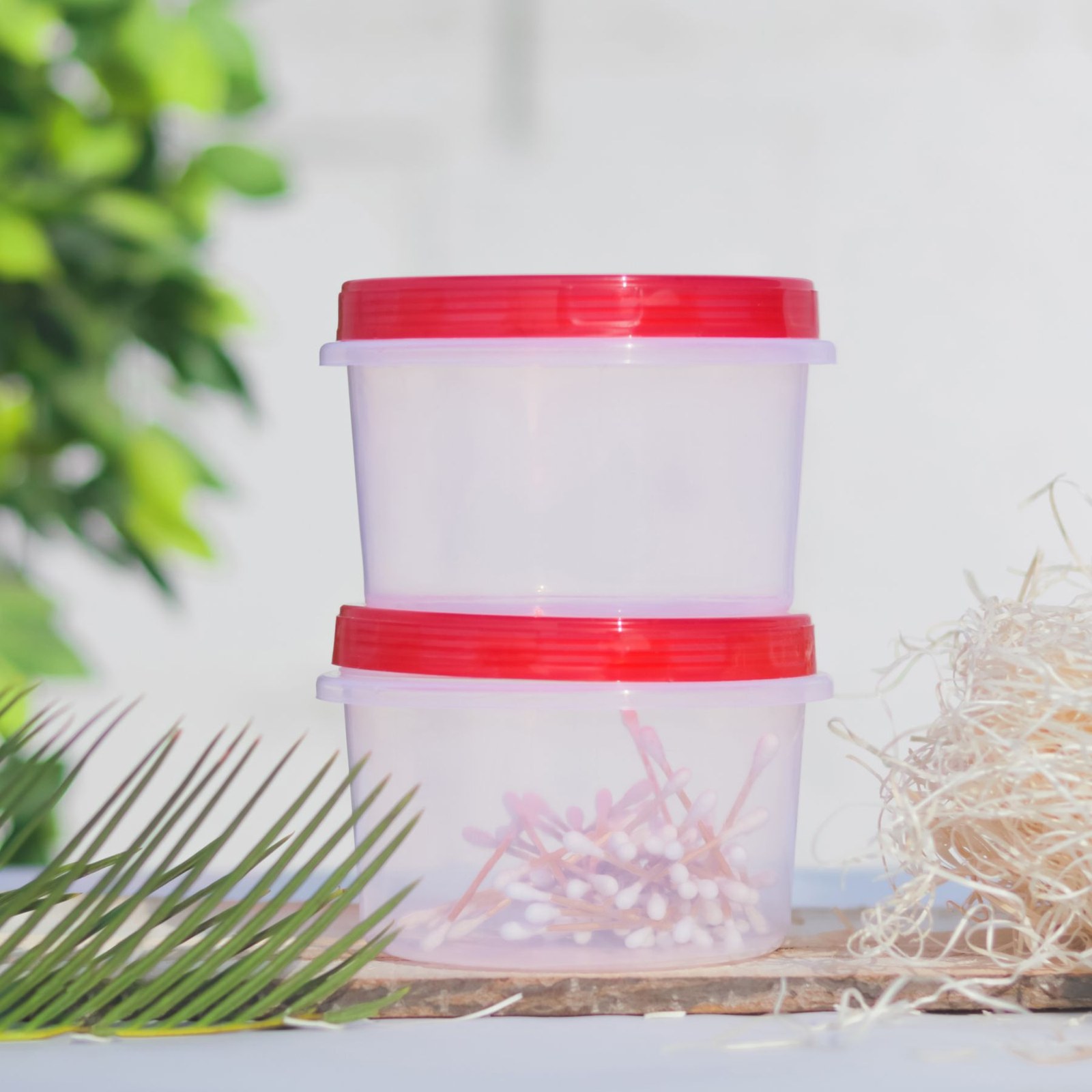
Rectangular containers often line up neatly on a refrigerator shelf, while round ones can be comfortable for bowls of food. Neither shape is automatically more efficient. A rectangle with large clips may take more room than a compact round pot, and a very deep box may hide what is underneath it.
Measure the usable shelf area, including the height beneath the shelf above. Check where the refrigerator door closes and whether the rear of the shelf has a curve or obstruction. External container measurements matter here; the advertised food capacity does not tell you how the box will fit.
Think about access, not just packing density
A tightly arranged shelf can be difficult to use if you must remove three boxes to reach lunch. Leave a way to retrieve the food you use most often. A shallow container may keep ingredients visible, while a tall stack can make the oldest portion disappear from view.
Round bowls may suit meals you eat directly from the container. A spoon reaches curved corners easily, and mixing can feel more natural. Rectangular boxes can be useful for sandwiches, flat portions or stacking several meals beside one another.
Inspect how the lids stack, too. Some designs have a stable raised edge; others slide when placed on top of each other. Do not build a tall stack of heavy glass containers merely because the bases happen to fit. Follow any stacking guidance and keep heavy items in an accessible position.
A mixture of shapes may be sensible if they do different jobs. The problem is usually random sizes without a storage plan, rather than mixing circles and rectangles in itself. Two reliable formats can be easier to manage than a large matching set containing sizes you rarely need.
Try a shelf-sized test
Cut paper shapes using the containers' external dimensions and arrange them on the shelf before ordering. Include your ordinary milk carton or other regular groceries. This quick test can reveal that a slightly smaller box leaves room for something else you need every week.
Finally, choose containers that are appropriate for the food and temperature conditions involved. Shape cannot compensate for a poor seal, an unreadable label or a material unsuitable for freezing or reheating. Start with the meal, then solve the shelf.