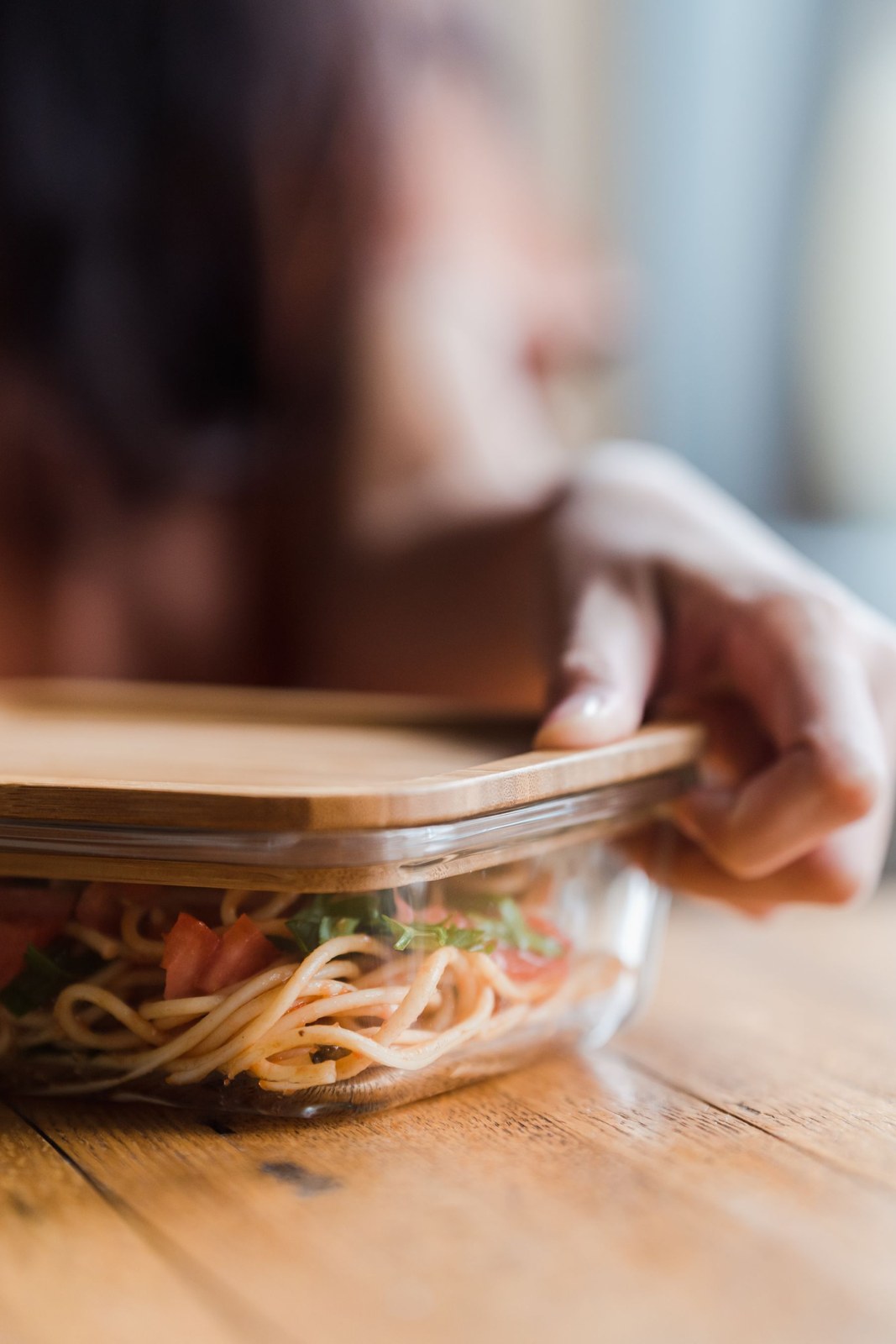
A leaking lunch is often blamed on the box as a whole, but the closure deserves a closer look. Before packing a liquid or saucy meal, inspect the rim, lid and any seal. A grain of rice caught in the edge can matter even when every clip appears closed.
Read the product's own description carefully. “Food storage” does not necessarily mean suitable for carrying soup on its side. Leak-resistant language can also have conditions. Use the container in the orientation and for the foods the manufacturer specifies.
Follow the seal all the way around
Look for cracks, warped edges and torn or displaced gaskets. Make sure the lid belongs to that exact base; containers from the same brand may look interchangeable without actually sealing correctly. If a removable seal has been washed, reinstall it as directed and check that it sits evenly.
Close the lid in the recommended order if the design specifies one. Do not force a clip over an overfilled container. Leave the space required by the manufacturer, particularly for food that will expand during freezing. Pressure from overfilling can interfere with an otherwise sound closure.
Test a new transport container at home with water over a sink, following its intended use. That can reveal an obvious mismatch or faulty seal before the first commute. It is not a lifetime guarantee: repeat an inspection after a drop, dishwasher damage or a change in how the lid fits.
Heat can complicate handling. Do not seal a container against its instructions while food is hot, and do not assume it is designed to hold pressure. Follow both the food-cooling guidance and the container's temperature limits rather than using a tight lid to solve every situation.
Pack with a little redundancy
Place the box upright in a bag where it cannot easily tumble. Keep papers and electronics away from the food compartment. A washable secondary pouch can limit mess, but it should not become an excuse to keep using a damaged closure.
Clean the seal channels thoroughly and let them dry before storage. If replacement gaskets or lids are sold, record the correct part number. Replacing a worn closure is often more sensible than repeatedly wrapping the same unreliable box in extra bags.