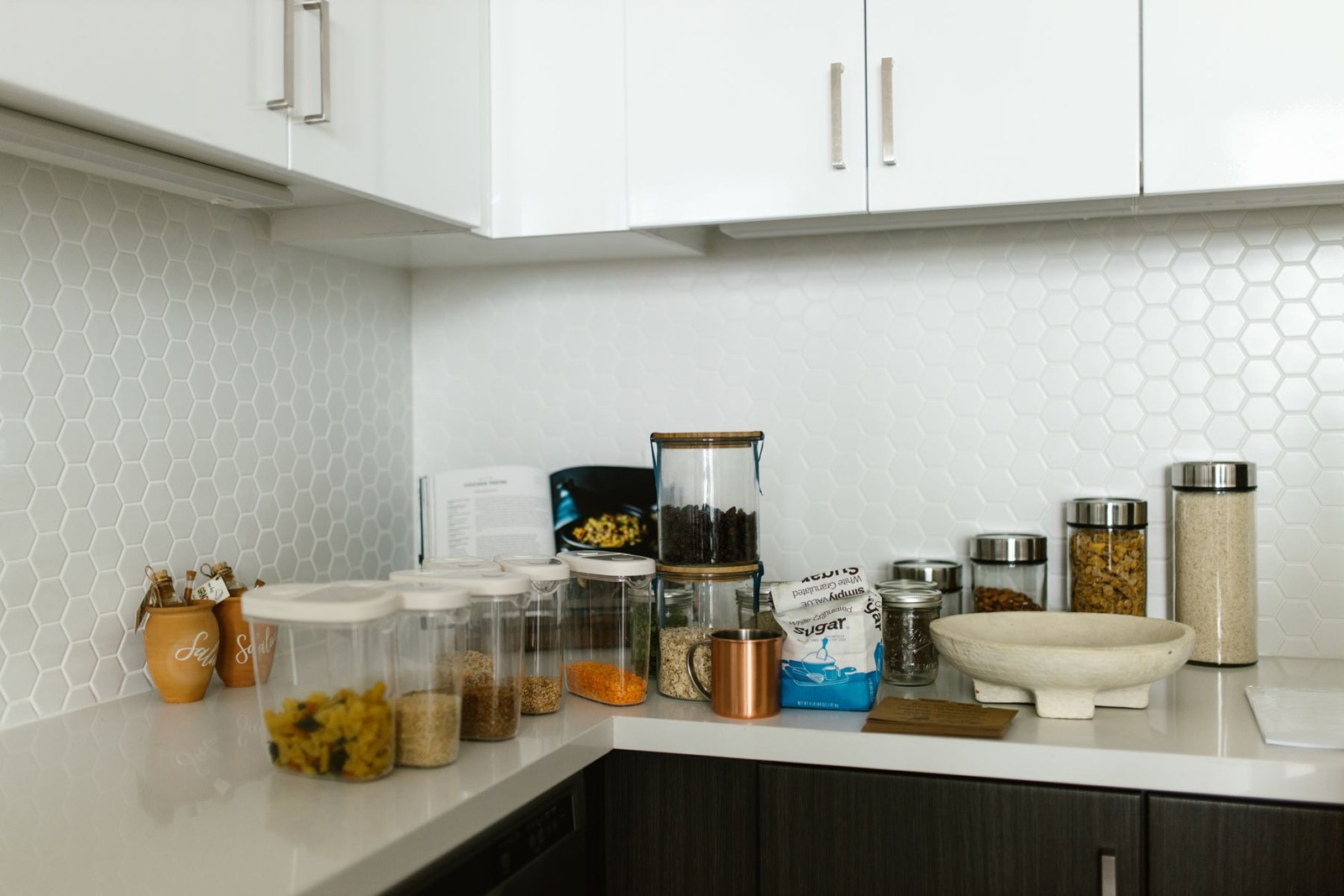
Glass and plastic containers can both be useful in a student kitchen. The better choice depends on what happens between cooking and washing up: whether you carry lunch, freeze portions, reheat food or mostly store ingredients at home.
For a lunch that travels in a backpack, weight matters. A glass box plus its food may be noticeably heavier than a similarly sized plastic one. Glass can also break if dropped. For storage at home, that extra weight may be less important than a clear view of the contents and a surface that is easy to inspect.
Treat each label separately
Microwave-safe, freezer-safe, dishwasher-safe and oven-safe are different claims. Check the particular container and its lid rather than assigning every property to a material. A glass base may have restrictions on sudden temperature changes, and its plastic lid may need to be removed before heating.
Do not assume that a glass container can move directly from freezer to hot oven. Follow its manufacturer's temperature and appliance instructions. Some glass bakeware is not intended for countertop ovens or other small appliances even when it is suitable for a conventional oven.
Plastic containers vary too. Use only those intended for the food-storage and heating tasks you need, and follow their instructions on venting and cleaning. Inspect them for cracks, damaged seals or other deterioration rather than keeping a compromised box simply because its lid still fits.
One week before buying a set
Try one container through the full routine if individual pieces are available. Fill it with your usual lunch, carry it in the bag, use the intended reheating method and wash it afterward. Check whether the clips are comfortable, whether sauce remains in the corners and whether the lid dries by the next morning.
For home storage, place the filled container on the actual refrigerator shelf beside your ordinary groceries. The lid may add enough height to prevent stacking where you expected. A box that fits empty with its lid removed has not passed that test.
If one size works well, adding another of that size can be more useful than buying a large assortment. Keep the model or range information so you can identify compatible lids later. A small collection built around proven uses is easier to maintain than a set chosen mainly because the pieces nest attractively in the shop.
Look at the lid and the stack
The closure often decides whether a container works for lunch. Check that you can close it easily with dry or slightly damp hands, that the seal is accessible for cleaning and that replacement lids are available if this matters to you. A storage lid is not necessarily leakproof in a moving bag.
Compare the external dimensions, including clips, against your refrigerator shelf and lunch bag. A large collection of mismatched lids can take more effort to manage than a small group in two compatible sizes.
You do not have to choose one material for everything. A lighter container for carrying food and a few glass boxes for home storage may fit your routine. Start with the meals and available space, then buy enough containers for a realistic washing cycle rather than an imagined month of preparation.