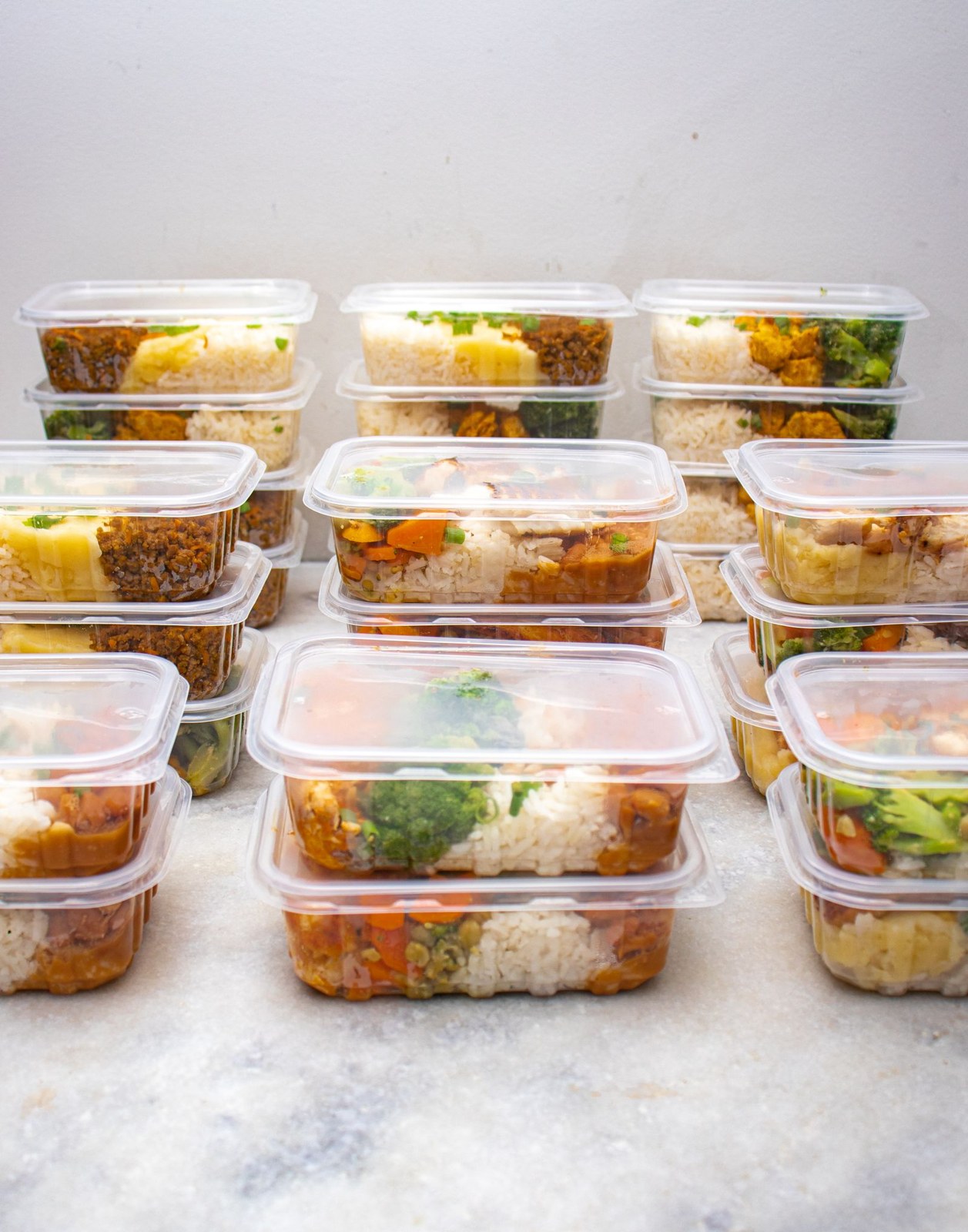
Meal preparation does not have to mean assembling five identical lunches. Cooking two adaptable components can be enough to make several later meals easier. The useful pair is one you enjoy in different combinations, such as cooked lentils and roasted vegetables or beans and a simple tomato sauce.
Choose components with overlapping preparation but different uses. Roasted carrots might go into a bowl, alongside a sandwich or into a blended soup. A plain batch of lentils can take lemon and herbs in one meal and tomato sauce in another. Keep strong finishing flavors separate when that gives you more flexibility.
Work backward from the next few days
Decide when you will eat each portion before cooking. Refrigerated cooked leftovers generally need to be used within three to four days when handled safely. Freeze suitable portions earlier if they are intended for later, and do not plan a full week of refrigerator meals without considering storage limits.
Cook quantities that fit your pans and refrigerator. A crowded tray can steam vegetables instead of roasting them, while a large hot pot takes more care to cool safely. Divide cooked food into shallow containers and refrigerate promptly rather than leaving it on the counter until completely cool.
Label the portions with their contents and cooking date. Keep enough space around food for appropriate cooling and storage, following appliance guidance. A meal-prep session that fills every shelf can create more difficulty than it saves.
When serving, take out the amount you need rather than repeatedly warming the whole batch. Reheat leftovers to 165°F throughout, checking with a food thermometer. If a component will be eaten cold, keep it properly chilled until serving.
An example of two components becoming three meals
Suppose you prepare a modest batch of lentils and a tray of carrots, both cooled and stored safely. The first meal could combine them warm with lemon dressing. The next could use some lentils in a tomato soup, while a small portion of carrots accompanies toast. The components stay recognizable, but the final meals have different textures.
The exact sequence should fit the storage window rather than filling an arbitrary number of days. Freeze a suitable portion early if you already know it will be needed later. Mark that decision on the container so the freezer portion does not get confused with the food planned for tomorrow.
Keep any fresh toppings separate until serving. This avoids reheating ingredients that are intended to stay crisp or cold, and lets you adjust the portion without assembling several identical boxes in advance.
Change the meal at the finish
Add texture and seasoning when you eat. Toast, a fresh vegetable, a squeeze of lemon or a spoonful of sauce can make the same cooked component feel different without another long cooking session. Choose additions based on what you already have open.
After the first attempt, note which component disappeared and which was left behind. Make more of the useful one next time rather than increasing the whole plan. A small, repeatable preparation session is more valuable than a large batch you become tired of eating.