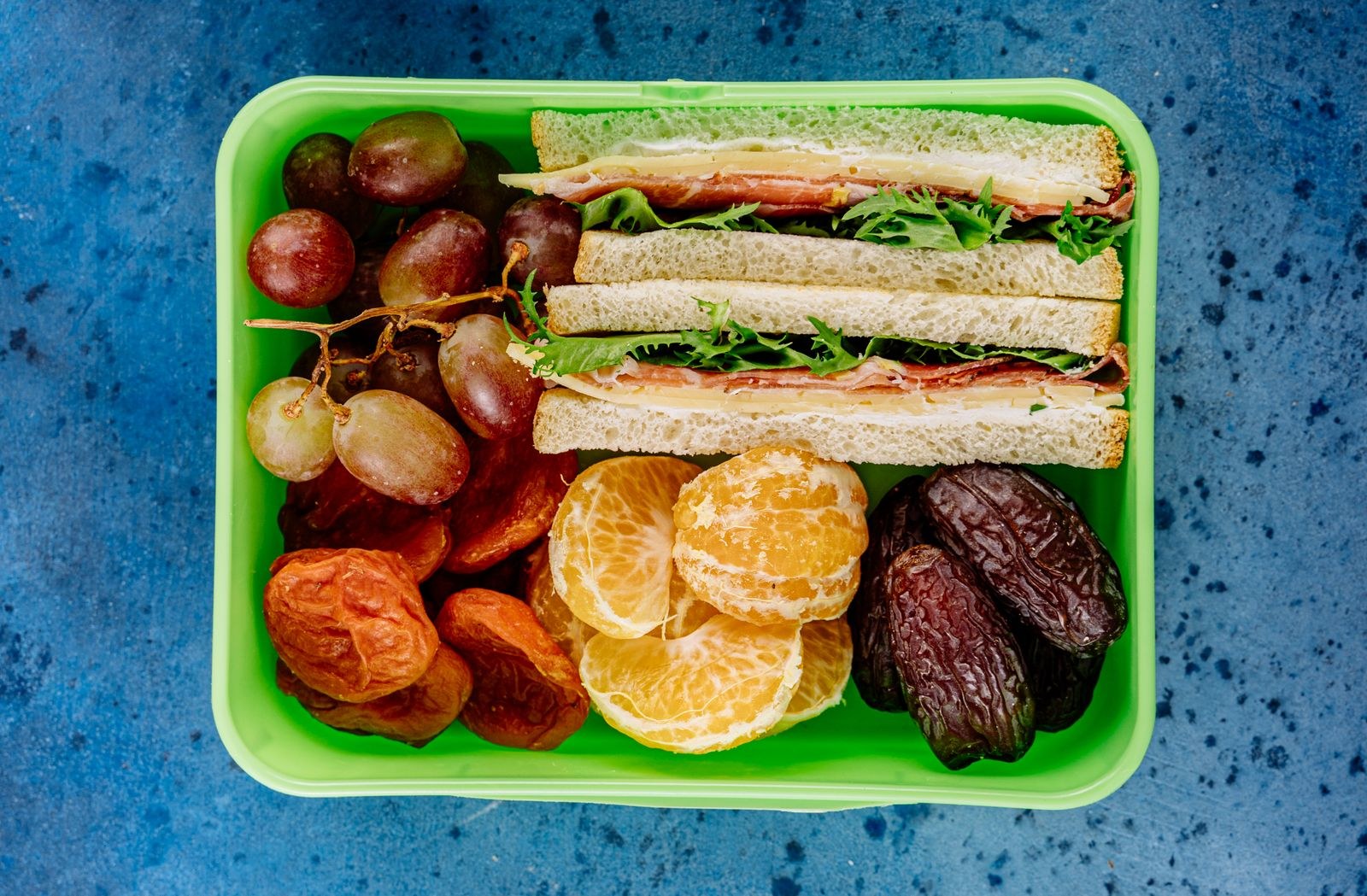
When there is no microwave at your destination, plan a meal that works at its intended serving temperature. Some foods that are appealing hot become firm, greasy or dry when cold. Think about texture from the beginning rather than simply packing whatever dinner produced.
A bean salad, a suitable sandwich or a grain bowl can be assembled with ingredients you already use. Add a dressing or moist component where it improves the meal, and keep anything crisp separate if it would soften during storage. Choose portions you can eat comfortably from the available container.
Cold does not mean safe without refrigeration. Perishable ingredients need to stay properly chilled, including cooked grains, many prepared salads and dairy-based additions. Start with refrigerated food, use an insulated lunch bag with adequate cold sources and refrigerate on arrival whenever possible. USDA recommends at least two cold sources for packed perishable lunches.
Build around the place you will eat
If you have only a short break and no table, a complicated collection of bowls and sauces may be inconvenient. A sturdy container that opens cleanly can be more useful than a visually elaborate arrangement. Pack the utensil you actually need and a napkin for any spills.
Consider strong smells and messy ingredients in a shared study space. That is a courtesy decision rather than a rule about which foods belong in lunch. A tightly closing container helps transport, but it cannot make every meal easy to eat beside a keyboard.
For days without reliable cooling, select foods that are specifically suitable for unrefrigerated storage until opened. Check package directions and plan what happens after opening. Do not rely on the idea that a food “usually seems fine” after several hours in a bag.
Prepare only what you expect to eat. If lunch remains partly uneaten, whether it can be saved depends on its temperature history and handling, not simply the fact that it is still in a container.
Try the meal at home once at the temperature you intend to serve it. Adjust moisture, seasoning and portion size before making it a regular packed lunch. A small rehearsal can reveal more than another specialized lunch accessory.