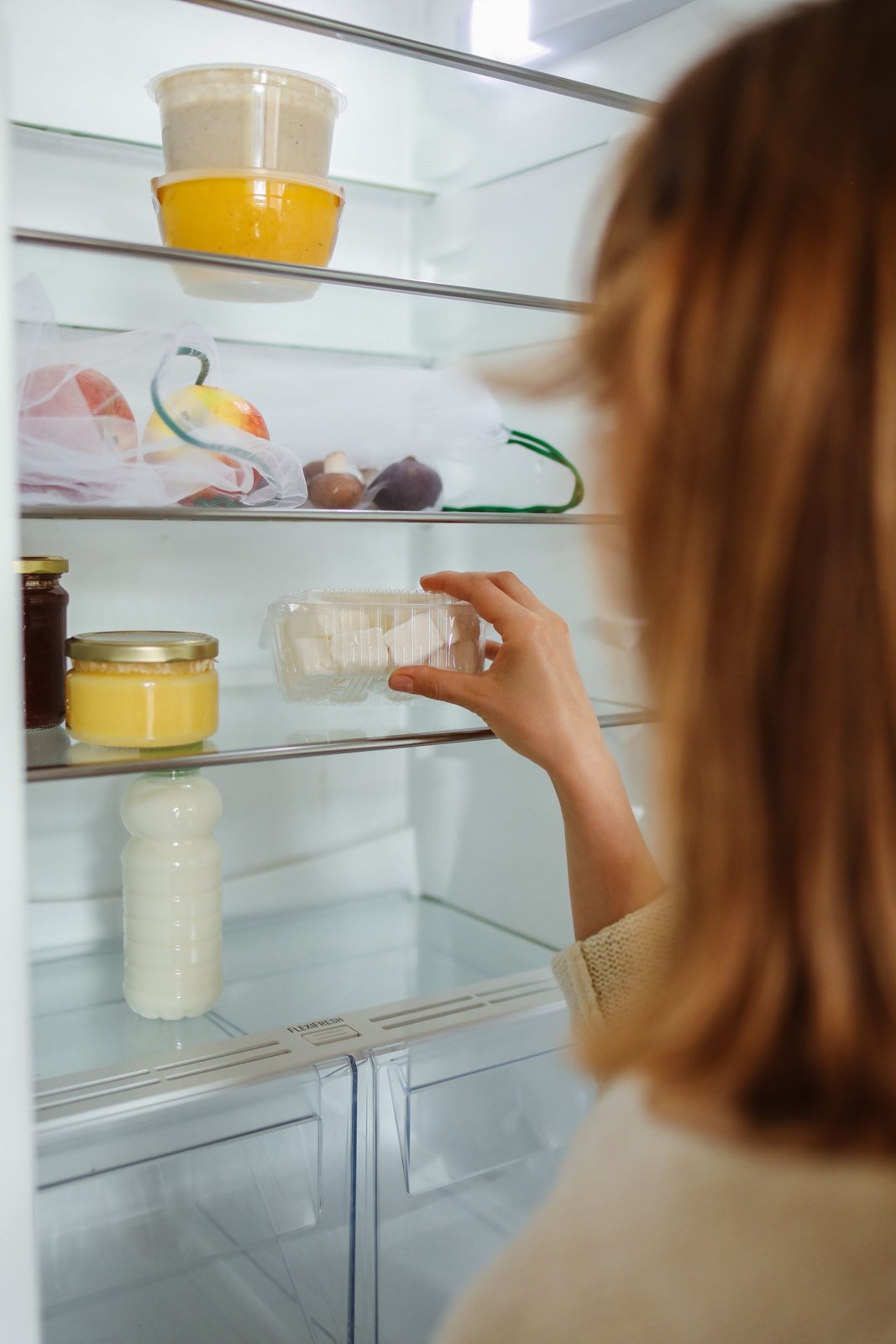
Before doubling a recipe, open the refrigerator. Check whether you have suitable containers and a place to put the portions you intend to save. It is much easier to solve that problem before cooking than while a large pot of food waits on the counter.
Start by identifying food that needs using soon. A labeled portion from yesterday may replace part of tonight's meal, reducing both cooking and storage pressure. Discard food that is no longer suitable rather than moving it to the back to make room for something new.
Clear a usable space
The aim is not to pack the refrigerator as tightly as possible. Food needs appropriate temperature control, and the appliance needs to operate as designed. Avoid blocking vents or preventing the door from closing. Keep the refrigerator at 40°F or below and check with a suitable appliance thermometer.
Choose shallow containers for cooked leftovers so that larger quantities can be divided for cooling. Have matching lids ready, following the container and food-cooling instructions. A deep pot that barely fits on a shelf is not a substitute for a sensible cooling arrangement.
Do not leave cooked food out until it reaches room temperature. Refrigerate promptly, generally within two hours or within one hour when the surrounding temperature is above 90°F. Small portions of hot food can go into the refrigerator; divide large quantities appropriately rather than putting away an enormous pot as one mass.
Label portions with the meal and cooking date. Plan to use refrigerated leftovers within three to four days when they have been handled safely, or freeze suitable portions sooner. Moving food into a different container later does not start a new storage period.
Cook a quantity your kitchen can support
If there is not enough space, reduce the batch or change the meal. A recipe that makes eight servings may be economical on paper but unhelpful in a shared refrigerator with room for two.
Discuss shared shelf space before a large cooking session. Other people may also be returning with groceries or putting away dinner, and their needs affect the available capacity.
Making room is a small preparation task, like finding a clean cutting board. Once it becomes part of the routine, leftovers are more likely to be stored safely, noticed and eaten instead of becoming an awkward afterthought.