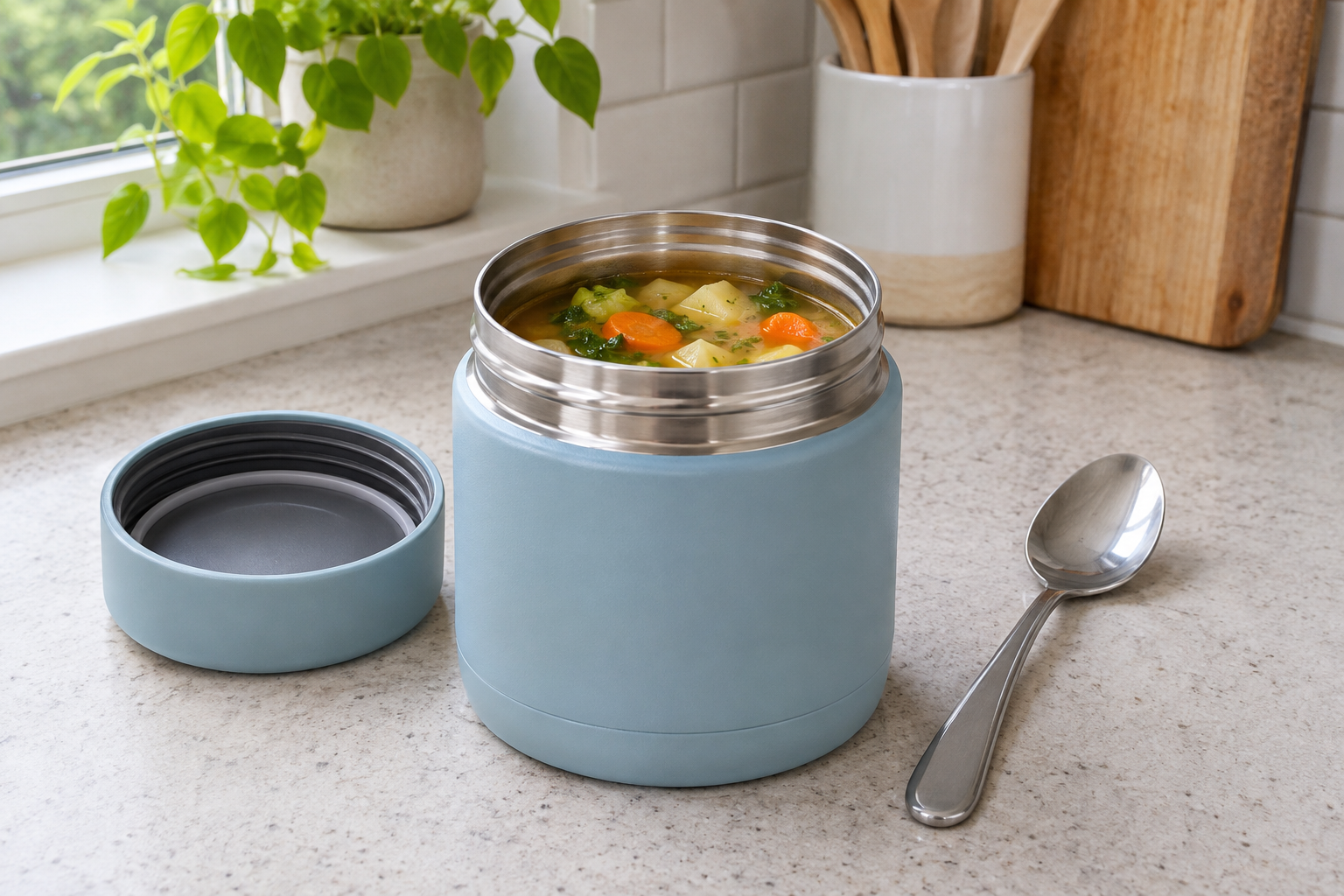
A food thermos is useful when you want a hot lunch without access to a microwave. It is not simply a drink flask with a wider lid. You need room to fill it, reach the food with a spoon and clean the interior thoroughly after the meal.
Choose a capacity around your normal serving rather than buying the largest jar available. A partly filled container may perform differently from the conditions used for a manufacturer's heat-retention claim. Read the instructions for filling, preheating and the type of food the jar is designed to carry.
Plan the temperature route
Hot food should remain at 140°F or above while being held for eating. A claim that a jar keeps food “warm” for several hours is not the same as confirming that your lunch stays above that temperature. The starting temperature, fill level, journey and how often you open it all affect the result.
Follow the manufacturer's preheating instructions if provided, then add thoroughly heated food and close the jar promptly. Leftovers should be reheated to 165°F before packing. Check temperatures with a suitable food thermometer rather than estimating from steam or the outside of the jar.
Do a realistic trial at home before depending on the container for a long day. Use the same amount and type of food, and check the temperature at the time you would normally eat. If the arrangement does not keep food safely hot, change the plan instead of relying on the label alone.
Inspect the parts you will wash
A broad opening makes spoon access and cleaning easier, but the lid can be more complicated than the body. Look for removable components, clear cleaning instructions and replacement seals. Wash and dry the jar as directed after each use, including recesses where soup can collect.
Consider how you will carry the filled jar. It should stand securely in your bag, with a closure intended for the task. Open it carefully according to its instructions, keeping hot contents away from your face and hands.
A thermos suits meals such as soup or beans when the complete temperature routine works. For a lunch that cannot be kept hot reliably, a properly chilled meal with cold sources is a more controllable option.