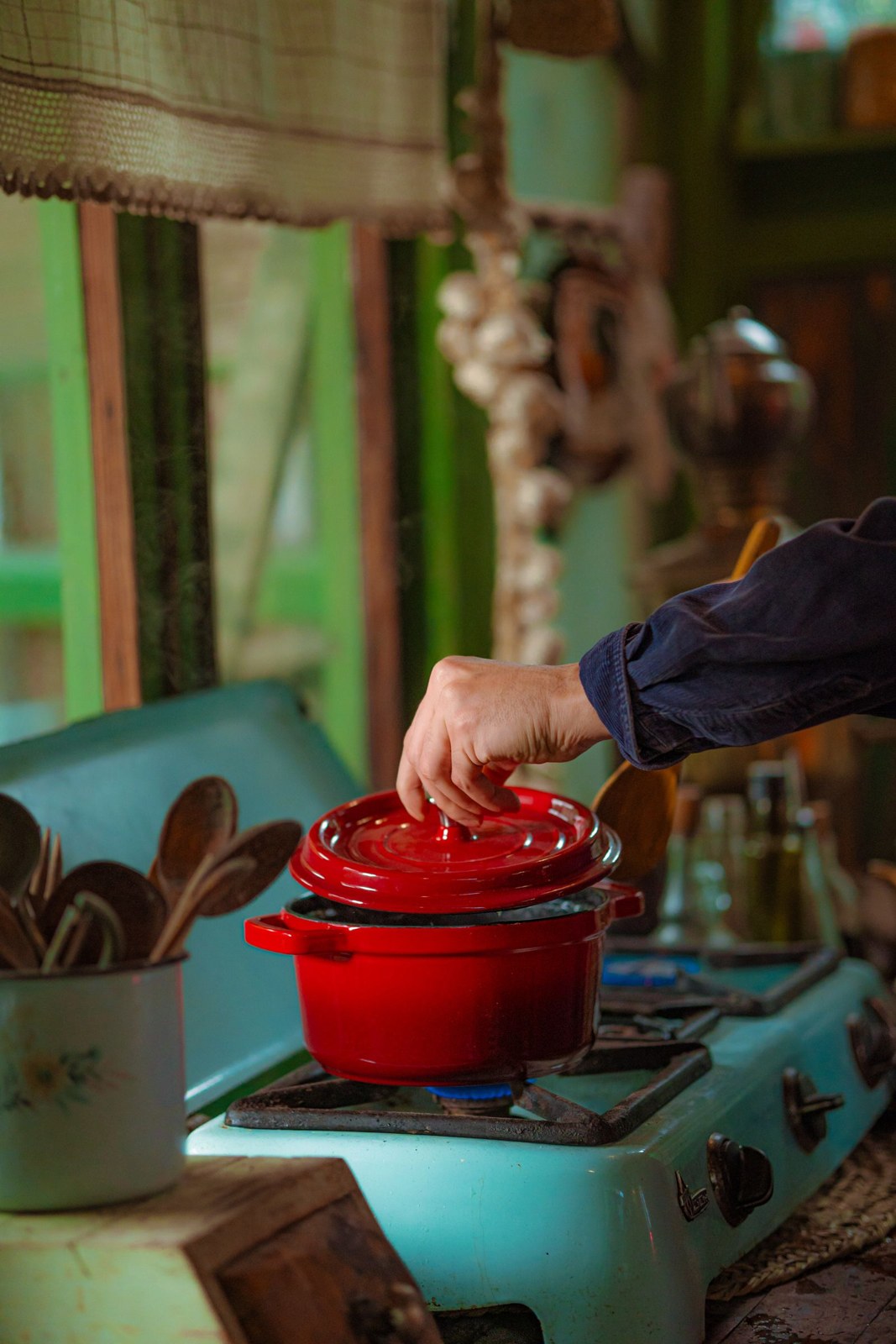
Putting a lid on a pan traps more steam and reduces evaporation. That can help a thick vegetable soften or a liquid come to a simmer, but it can also make a sauce stay thinner than expected. The lid is part of the cooking method, not merely a way to keep the counter tidy.
Use a lid that fits the pan securely and is intended for the temperature and appliance involved. A loosely balanced plate or an unsuitable lid can be difficult to lift safely. Check the handle too; it may become hot even when the knob looks separate from the pan.
Covered and uncovered do different jobs
Covering can help food cook in a moist environment. A recipe may brown an ingredient first, add a little liquid and then cover it to finish gently. If you keep the lid off throughout, the liquid may evaporate before the food softens.
Cooking uncovered allows more evaporation and can help a sauce reduce. It also lets you observe the surface more easily. If a sauce is becoming too concentrated or the pan is drying out, lower the heat or adjust the liquid according to the recipe instead of continuing simply because the original time has not elapsed.
A partly covered pan sits between those conditions. Use that approach when the recipe calls for it, keeping the lid stable rather than perched in a position where it can slide.
Watch what changes under the lid
A burner setting that produced a gentle simmer uncovered may behave differently once the lid is on. Check the food and reduce heat if necessary. Boiling over is not a sign that the meal is cooking more effectively.
Lift the lid carefully so escaping steam moves away from your face and hands. Use appropriate protection for hot handles and avoid placing a hot lid on a surface that cannot tolerate it. Condensation may drip from the underside, so give it a safe resting place.
Do not use a lid to infer food safety. Covered food can still heat unevenly, and internal temperatures need checking where required. Follow the recipe and appropriate safety guidance for the ingredients.
When a meal does not turn out as expected, remember whether you covered it. A lid left on during reduction or removed during a gentle braise can explain a texture change that otherwise looks like a problem with timing or ingredients.