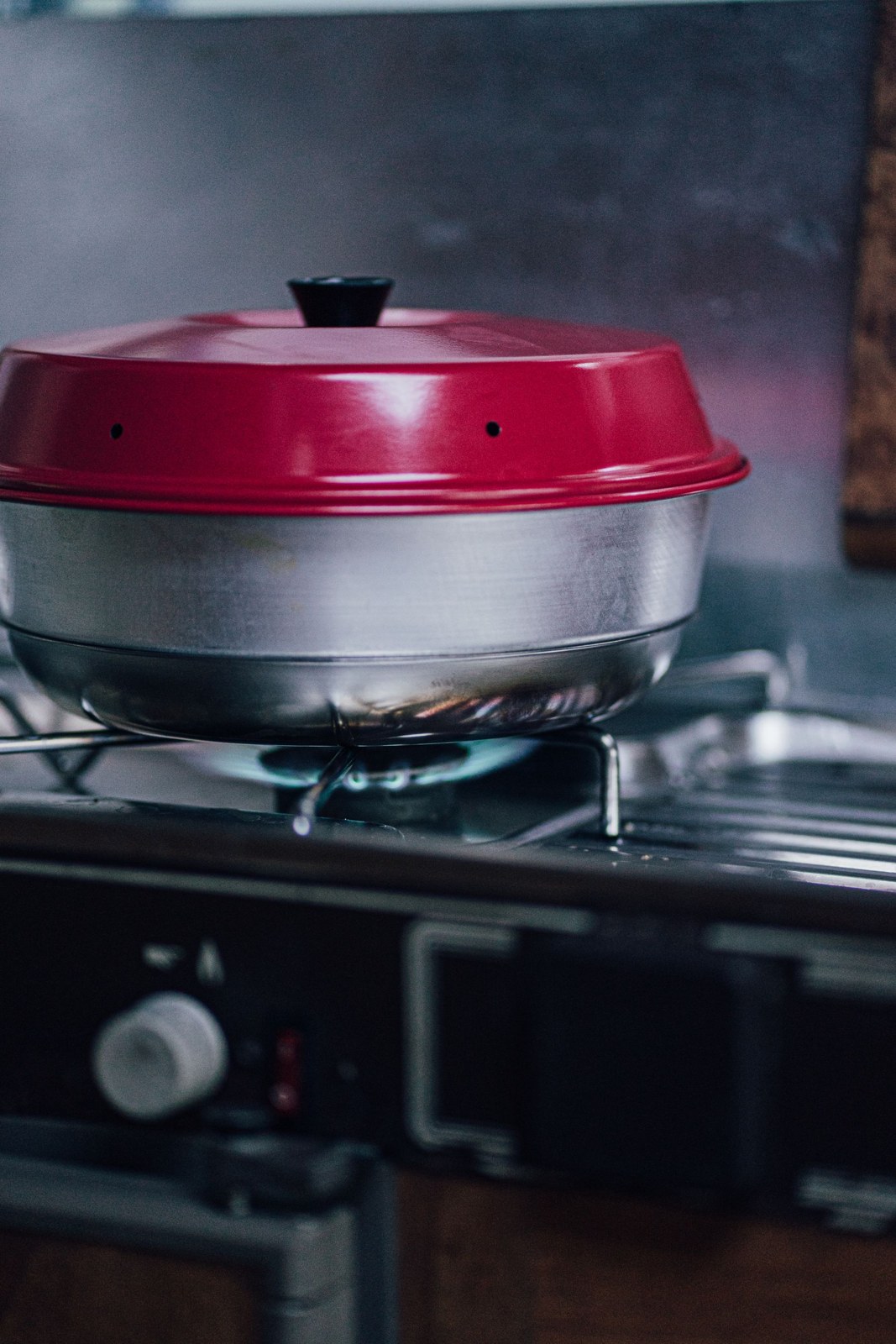
A matching finish is a pleasant extra; a reliable fit is the reason to buy a pot lid. The measurement in a listing may refer to the rim, a particular pan range or a nominal size. Compare it with the dimensions the manufacturer uses rather than assuming any lid with the same number will fit.
Try an existing lid only while both pieces are cool and empty. It should rest as intended without balancing precariously, dropping too far into the pot or interfering with the handle. Do not force a tight fit. Cooking can change temperatures and handling conditions, and a marginal arrangement is not worth relying on over hot food.
A lid does more than prevent splashes. It changes how moisture and heat are retained, which affects simmering and reduction. A recipe that calls for cooking uncovered may become wetter under a lid. Conversely, removing a lid can change the liquid available to the food. Treat it as part of the cooking method rather than a decorative accessory.
The handle and vent need their own check
Look at the knob or handle and how you will grasp it with appropriate protection. A low profile may store neatly but leave little room for an oven mitt. A handle that is comfortable when cool may require protection during cooking, even if another lid in the kitchen stays cooler.
Glass can help you observe food, though steam and condensation may obscure the view. A vent may release some steam, but it does not make every lifting direction comfortable. Lift according to a safe handling routine that keeps steam away from your face and hands.
Oven limits can differ between the lid and pan. Check the glass, knob, seal and other components, as well as any restrictions on temperature changes. A universal lid with flexible material is not automatically suitable for an oven simply because it fits an oven-safe pot.
For storage, a rack or upright divider can make lids easier to retrieve, provided they cannot tip or fall. Dry around the rim and handle attachment before putting them away. If a lid is chipped, cracked or otherwise damaged, follow the manufacturer's replacement advice rather than treating the defect as cosmetic.