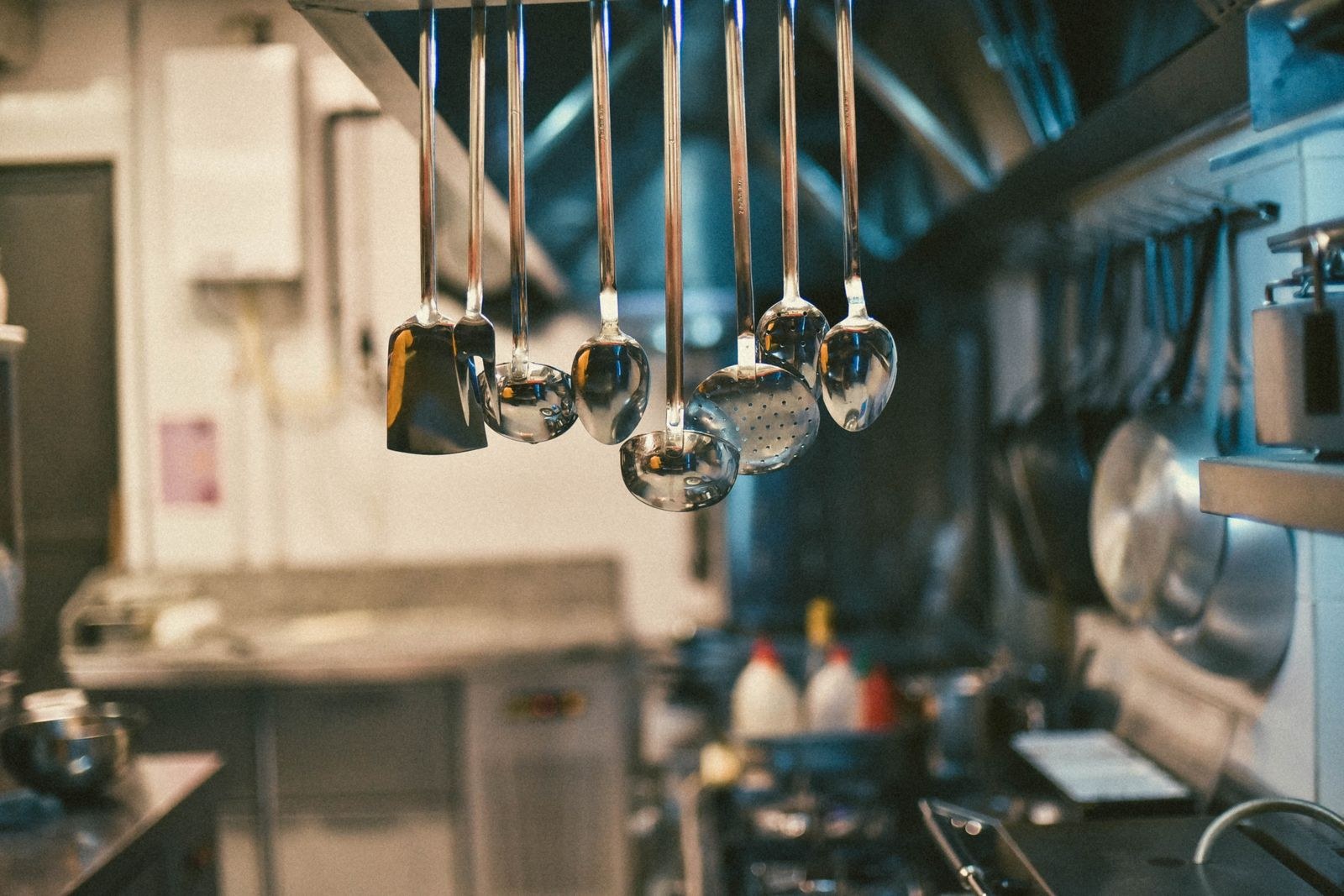
A boxed kitchen set can make moving into a first apartment feel simpler. Everything matches, the number of pieces sounds generous, and you do not have to decide what belongs together. The problem often appears later, when the cupboard contains three utensils you never reach for and no pan that suits your usual dinner.
Before shopping, write down three meals you would realistically make during a busy week. Pasta with vegetables, a bean skillet and eggs on toast call for a different collection than regular baking. This is a more useful starting point than imagining every meal you might eventually learn to cook.
Build around the main cooking jobs
For many small kitchens, one frying pan and one lidded saucepan are a workable beginning. Choose their sizes around portions, burner dimensions and storage. A pan that technically fits the stovetop may still have a handle that blocks the neighboring burner or catches people moving past.
Add a knife you can hold comfortably, a stable cutting board, a stirring utensil compatible with the pan and a way to drain food. A colander is convenient, but its shape should fit both the sink and the cupboard. A heat-resistant spatula and a spoon do different jobs; neither needs to come in a bundle of six.
Think about handling hot food as part of the same purchase. You need suitable dry oven mitts or holders and a place to set a hot pot without damaging the counter. A food thermometer is also useful when checking the temperature of cooked or reheated food. Pick one whose instructions and display you can understand easily.
Count the less glamorous pieces
A small kit still needs somewhere to wash, dry and store its tools. Check whether the apartment already has a dish rack, cleaning supplies and trash containers before duplicating them. A large cutting board that never dries properly in your available space can be less convenient than a modest one you can clean after every use.
For leftovers, begin with a few food-storage containers in useful sizes. Too many empty boxes can consume the space you hoped to save by buying fewer pans. Make sure the containers suit their intended use, including freezing or microwave heating where relevant, rather than assuming every food container does both.
Before the first grocery trip
Walk through one complete meal using the equipment on your list. For pasta with vegetables, imagine opening the packaging, cutting the vegetables, boiling and draining the pasta, stirring the sauce and serving it. The missing item is often a small one, such as a can opener or a stable draining setup, rather than another pan.
Next, imagine washing the same equipment. Check that the largest pan can be handled in the sink and that the drying area can accommodate it. If the setup only works by balancing hot or wet items on an unsuitable surface, change the arrangement before buying.
Keep the first grocery list modest while you learn the kitchen. Cooking a few familiar meals reveals whether your pot is the right size and whether a particular utensil earns its space. Those observations are a better basis for the second shopping trip than completing an equipment checklist all at once.
Leave one purchase undecided
After a week or two of cooking, you will know what repeatedly slows you down. Perhaps it is chopping onions, measuring ingredients or reheating lunch. Buy for that repeated task instead of adding another tool because it completes a matching collection.
The goal is not to own as little as possible. It is to have equipment that makes your ordinary meals manageable. A second pan is a sensible purchase when the first is constantly occupied; it is less useful when it is simply the discounted extra in a box.