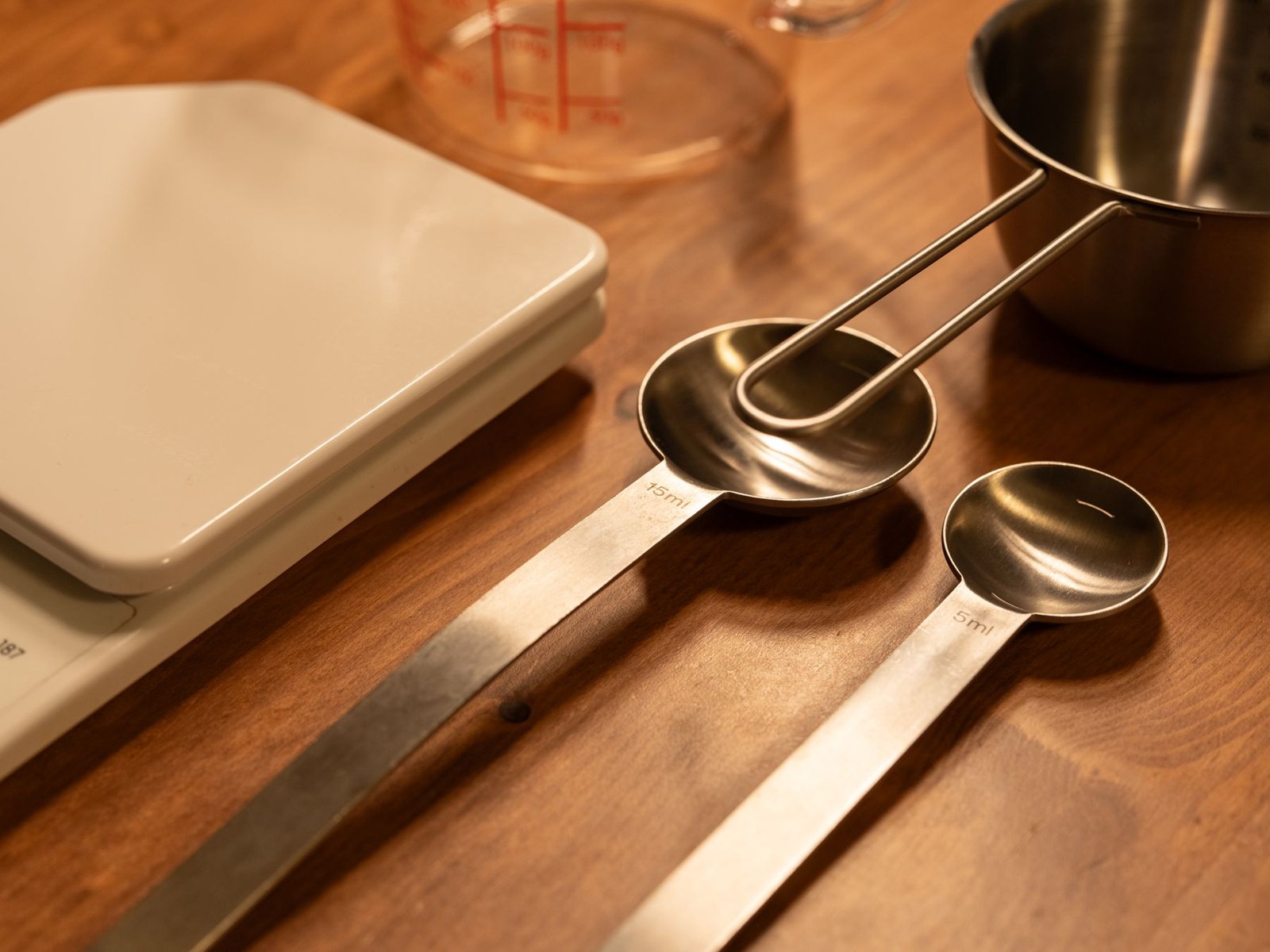
A kitchen scale and measuring cups solve different problems. The scale measures mass; a cup measures volume. That distinction matters most with ingredients that can pack tightly, sit loosely or vary in size. A cup filled casually with flour is not necessarily the same amount as a cup filled another way.
If a recipe gives grams, weighing the ingredient usually avoids the need to interpret how it should sit in a cup. Put a suitable bowl on the scale, use the tare function to reset the display and add the ingredient. For several ingredients, check each quantity before resetting again so you do not lose track of an earlier addition.
Where a scale makes the work easier
Weight can be convenient when dividing a recipe, portioning dough or measuring an ingredient that is awkward to scoop cleanly. It can also reduce washing when several additions go into the same bowl. That only helps if the scale remains readable beneath the bowl and has enough capacity for the bowl plus its contents.
Check the unit selected before adding anything. A display in ounces and a recipe in grams should not be treated as though the numbers are interchangeable. For very small quantities, the scale's resolution and minimum useful amount matter; an ordinary kitchen model may not be suitable for tiny measurements.
A scale is not automatically a measuring jug. Grams and milliliters describe different things, and a liquid's density affects the relationship between them. Follow the recipe's stated measure instead of assuming every liquid weighs the same for its volume.
Keep a few volume tools for ordinary cooking
Measuring spoons remain useful for small quantities when the recipe specifies them. A liquid measuring jug with clear markings can be easier to use for stock or water, especially when you need to pour. Read the marking at the appropriate level rather than holding the jug at an angle.
For cups, use the type and filling method the recipe expects. A mug from the cupboard is not a standardized measuring cup. Also pay attention to the recipe's origin: cup conventions are not identical in every country, so weight measurements can remove ambiguity when available.
Buy around the recipes you follow
If you mostly make flexible skillet meals, you may not need a full measuring collection on the first day. If baking is a regular activity, a readable scale and a small set of suitable spoons can be a useful foundation. Keep the tools dry, clean and stored where their markings remain legible.
The aim is consistency, not precision for its own sake. Measure closely when the method depends on a proportion, and learn where a little adjustment is part of cooking. Owning both a scale and cups is reasonable when each has a recurring job; buying duplicates of every format is rarely necessary.