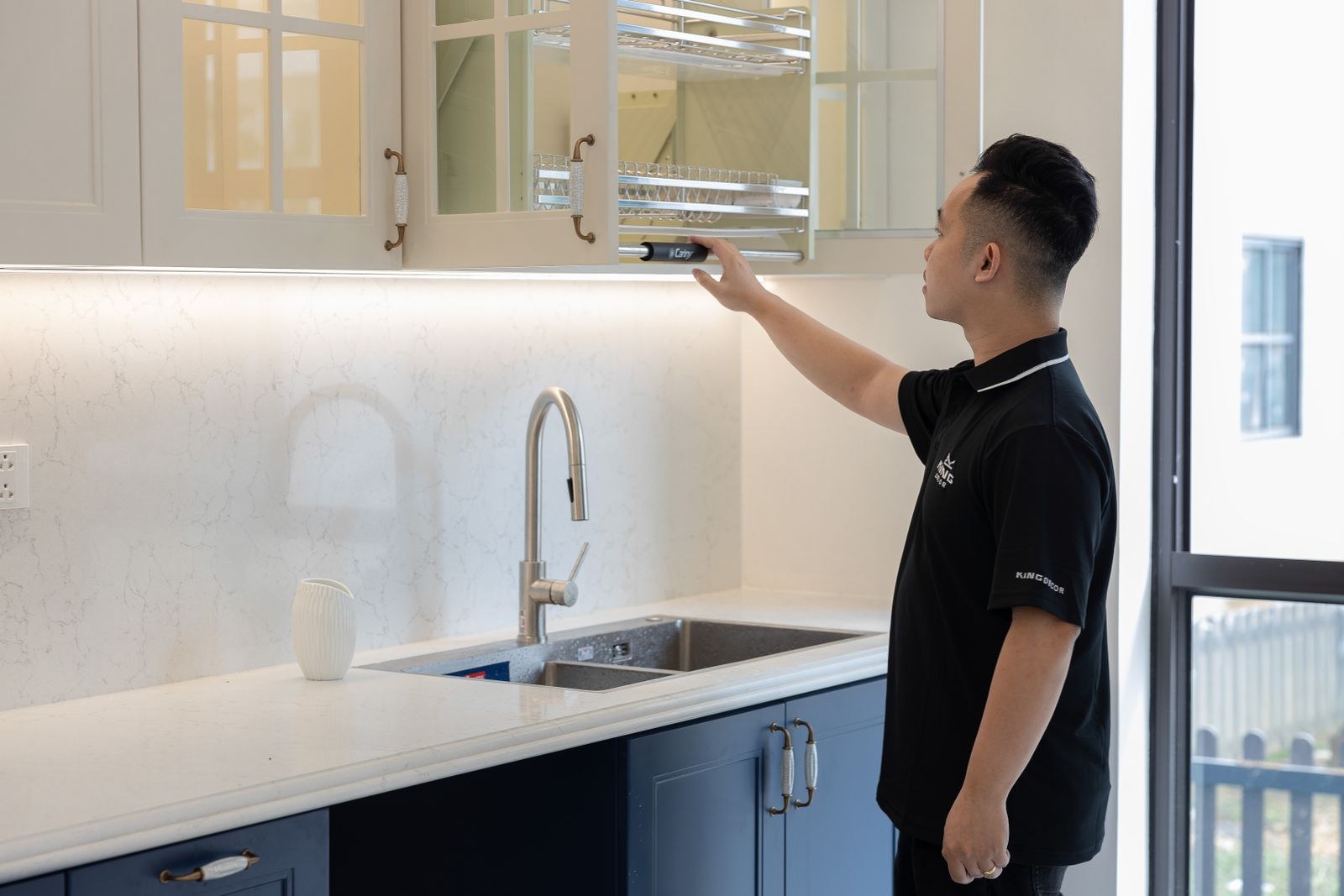
A narrow cabinet becomes difficult when useful items disappear behind one another. Before buying an organizer, remove the contents and identify what is stored there because it fits the space and what is there only because it had nowhere else to go.
Measure the opening as well as the interior. Hinges and door frames can prevent a wide bin from sliding out even when it fits inside. Check shelf height and weight limits before adding equipment, and follow any instructions for adjustable shelves.
Make the back reachable
Group small packets or light items in a shallow container you can pull forward safely. Avoid filling a bin so heavily that lifting it becomes awkward. A container is useful when it improves access, not when it hides several layers of food in a new box.
Store frequently used items toward the front. Put labels where you can read them without moving everything. If the cabinet holds food, keep package directions and dates available and check for ingredients that need using before purchasing more.
Vertical storage can help with suitable lightweight trays or lids, provided the divider is stable and the items cannot fall when the door opens. Heavy cookware needs secure, accessible placement. Do not balance a stack on a narrow improvised support simply to gain another level.
Door-mounted organizers require careful checking. Their load, installation method and clearance must suit the cabinet. A rack that prevents the door closing or strikes a shelf can create more problems than it solves, and rental accommodation may restrict modifications.
Move the wrong items elsewhere
An oversized appliance may be better in a lower, wider space rather than wedged into the narrow cabinet. Likewise, rarely used serving pieces should not block everyday ingredients if another appropriate location exists.
Leave room to remove an item without dismantling the whole arrangement. This may mean storing less in that cabinet, which can be a better result than maximum theoretical capacity.
After reorganizing, use the cabinet through several ordinary meals. Notice whether the back stays accessible and whether items return to their places. Buy an organizer only for the remaining specific problem, with measurements in hand, instead of choosing one first and trying to make the cabinet fit it.