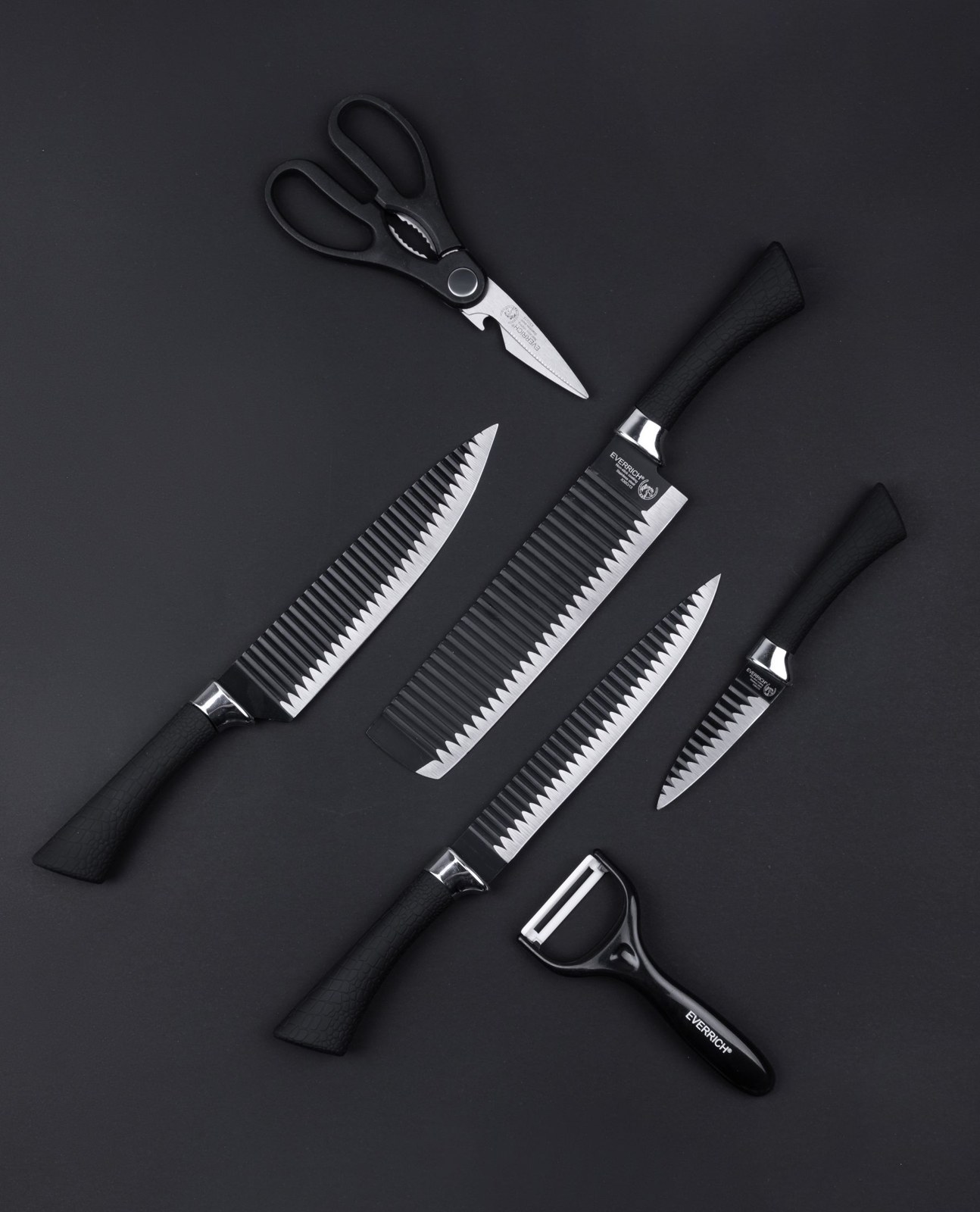
Kitchen shears can be useful for snipping herbs, opening suitable food packaging or cutting certain foods into smaller pieces. They can also become an awkward tool if their joint traps residue and you cannot clean it properly. Before choosing a pair, decide whether you want a food-preparation tool or general household scissors.
Keep those roles distinct. Scissors used for tape, deliveries and other nonfood tasks should not casually move into food preparation. If you use kitchen shears on packaging, consider what has touched the outside before using them on ingredients.
Check the grip and the joint
Handle loops should fit your hand without forcing an uncomfortable angle. Try opening and closing the shears if a shop permits it, and consider how they feel for someone who is left-handed if that applies. A tool that is comfortable for one person may be awkward for another.
Some kitchen shears separate for cleaning. That can make the joint easier to reach, but you need to understand how the pieces come apart and lock back together. Do not pull at a fixed joint because a similar-looking pair is designed to separate.
Read the washing instructions and dry all accessible parts. Dishwasher permission, rust resistance and blade construction are separate considerations. A claim about the metal does not mean water should remain trapped in the joint after use.
Compare with the knife you already have
For a pile of vegetables on a board, a suitable knife may still be faster and more controlled. Shears are most useful when their cutting motion solves a specific problem, not when they are expected to replace every blade in the kitchen.
Do not assume they can handle bones, frozen food or hard packaging unless the product is designed for that purpose. Extra notches, openers and serrations may add versatility, but they can also make cleaning more involved. Avoid paying for features you cannot identify or will not use.
Give the shears a predictable storage place with the blades closed or protected as appropriate. If they repeatedly save effort during your regular preparation, they deserve a place in the drawer. If you only need them for mail, ordinary household scissors stored away from food tools may be the more honest purchase.