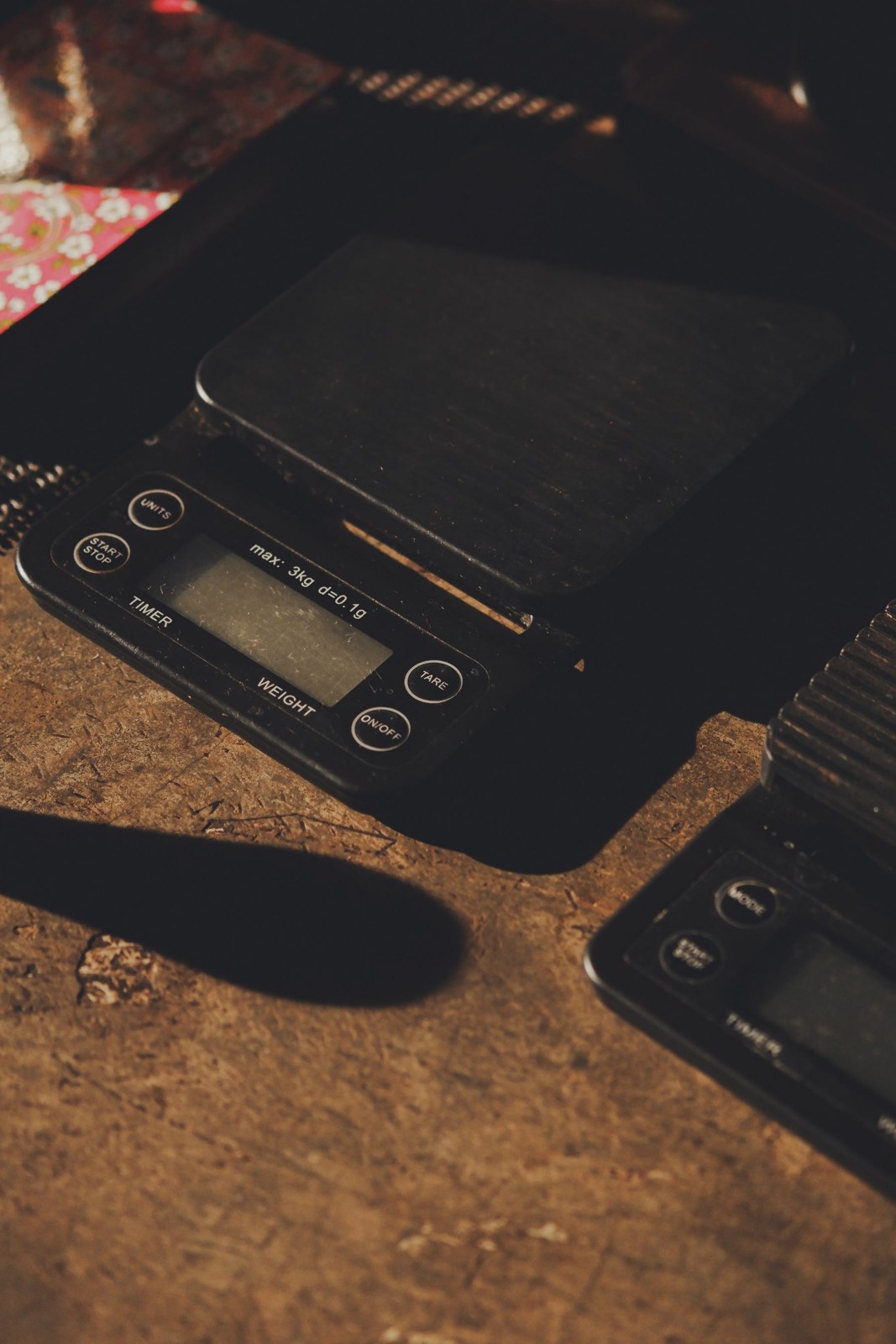
The largest number on a kitchen-scale listing is usually its maximum load. That is worth checking, but it does not tell you how conveniently the scale measures an ordinary ingredient. A model that can hold a heavy pot may still be awkward with a small bowl or a few spoonfuls of food.
Remember that the load includes the container. If a bowl is already heavy, its weight uses part of the scale's capacity even after you press tare and the display returns to zero. Tare changes the displayed reference point, not the physical limit of the device.
Look at the platform and screen together
Put the dimensions of your usual bowl beside the scale's platform dimensions. A wide bowl can hide a display positioned close to the weighing area. A raised platform or a screen farther forward may help, but compare the complete layout rather than a single feature.
The scale should sit on a firm, level surface. Using it on a soft towel or an uneven board can interfere with measurement. Check whether the feet are secure and whether the platform is easy to wipe without getting liquid into controls or seams.
Resolution describes the increments shown on the display. It is not a complete guarantee of accuracy at every load. For tiny quantities, check the manufacturer's minimum useful measurement and intended application. Do not assume an ordinary kitchen scale is suitable for precision tasks outside food preparation.
Small controls can cause big confusion
A unit button should make it clear whether you are reading grams, ounces or another mode. If the scale offers a liquid-volume setting, understand what assumptions that mode uses rather than treating all liquids as equivalent.
An automatic shutoff can save battery power but may interrupt a slow addition. Read how it behaves and whether the setting can be changed. A tare button should be easy to use without accidentally switching units or turning the device off.
Keep a record of the battery type and use the recommended cleaning method. A scale is useful when it makes measuring simpler, not when every session begins with hunting for a special battery or guessing what the display means.