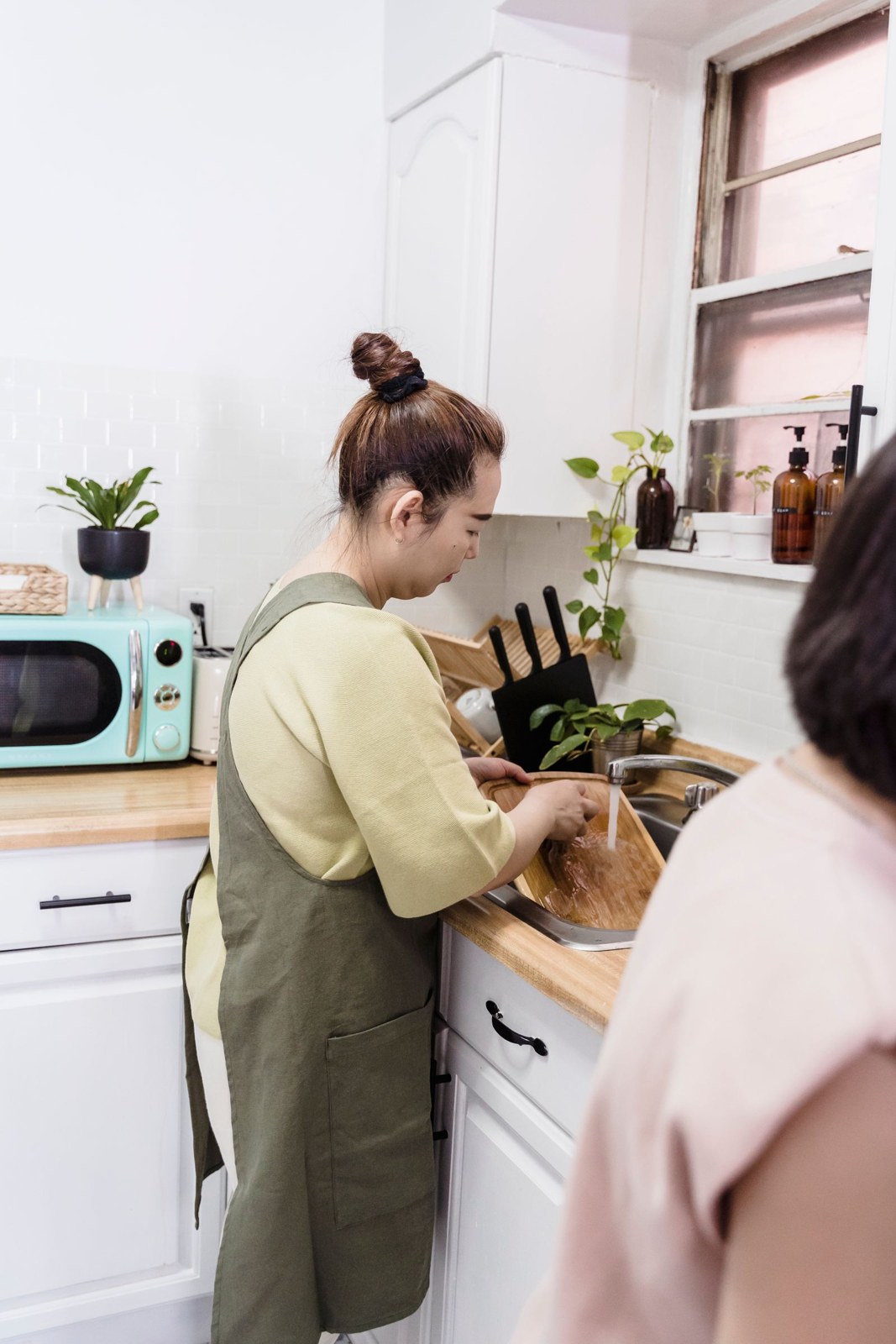
A wooden cutting board needs cleaning after food preparation and enough airflow to dry. Start with the board manufacturer's instructions, particularly if it has glued sections, special finishes or an end-grain construction. Do not assume every wooden product tolerates the same washing method.
Remove food debris and wash with appropriate soap and water, following food-safety guidance. Pay attention to the whole used surface and edges. Avoid leaving the board soaking in a sink or putting it in a dishwasher unless the manufacturer specifically permits that treatment.
Separate food tasks safely
Raw animal foods and ready-to-eat ingredients need appropriate separation. Use clean boards and utensils between tasks, and follow reliable sanitizing guidance when it is required. A quick wipe is not equivalent to a thorough clean after contamination.
Do not improvise chemical mixtures for sanitizing. Use a suitable method from an authoritative source and follow its concentration, contact time and rinsing directions. Cleaning removes residue; sanitizing, when needed, is a separate step with its own instructions.
Dry the board with a clean towel, then allow air to reach both faces. Propping it securely on an edge can help when the design allows. Leaving a wet board flat against the counter can trap moisture underneath.
Inspect the surface
Deep cracks, damaged joints or grooves that cannot be cleaned adequately can make a board unsuitable for continued food preparation. Maintenance oil does not repair every defect. Replace or seek appropriate advice when the surface can no longer be kept sound and clean.
If the manufacturer recommends oiling, use a product intended for the board and food-contact purpose. Apply it at the recommended interval and method, after the board is clean and dry. Do not use an arbitrary cooking oil or furniture treatment as a substitute without appropriate guidance.
Store the board away from prolonged moisture and unsuitable heat. A place directly beside a hot appliance or constantly wet sink area may not be ideal. Make sure it can be retrieved without falling or disturbing knives stored nearby.
The board's appearance may change with ordinary use, but hygiene depends on its condition and the cleaning routine. Keeping it clean, dry and structurally sound matters more than maintaining an untouched showroom color.