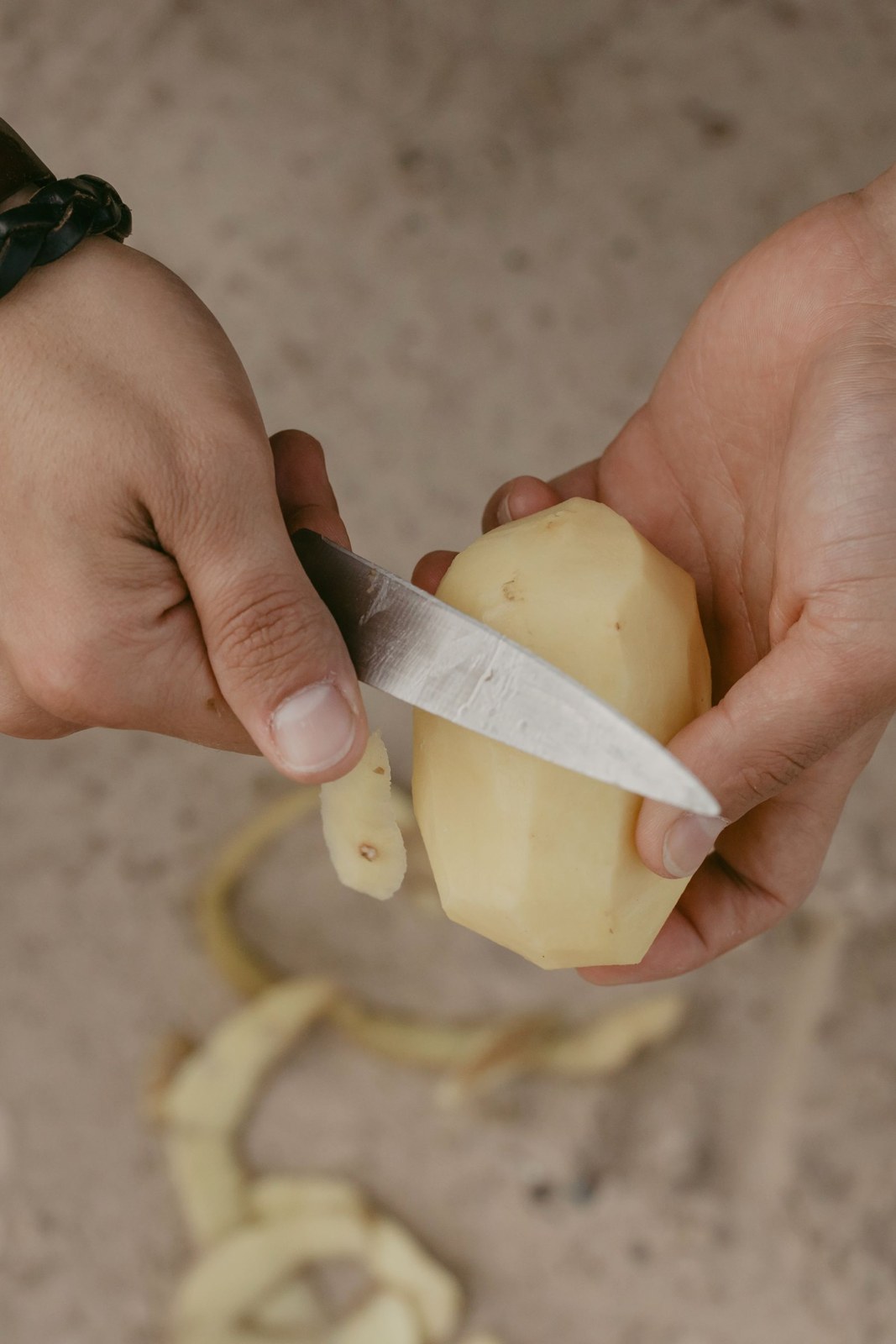
A paring knife is easy to add to a shopping basket because it is small and often inexpensive. Whether it earns its place depends on the preparation you do. Trimming a strawberry, removing a small blemish or making a precise cut may suit a short blade. Chopping a large pile of vegetables usually does not become easier just because the knife is smaller.
Look at the tasks that feel awkward with your current knife. If the problem is a blunt edge, poor board position or a slippery ingredient, a second knife may not solve it. Address the cause before assuming you need a different blade for every food.
Short does not mean automatically safer
A small knife still needs a controlled grip and a stable work surface. Whenever a task can be done on a board, avoid inventing an in-hand technique merely because the blade looks manageable. Keep fingers out of its path and do not use the knife to pry open packaging or cans.
Compare the usable handle length as well as the blade. Some compact knives have handles that are awkward for larger hands, especially during repetitive work. A comfortable handle should let you guide the blade without placing your fingers where they may slide toward the edge.
Blade shape changes the job. A straight-edged small knife, a curved peeling knife and a short serrated knife are not identical substitutes. Choose around an actual task rather than buying a group because all the pieces are described as essential.
Give it a place to live
Small knives are particularly easy to lose among utensils. Store the blade in an appropriate guard, rack or block instead of loose beneath spatulas. Wash and dry it according to its instructions, and avoid leaving it hidden in soapy water.
Check whether your sharpening method suits the blade. A tiny or unusually shaped edge may not work with a device intended for another kind of knife. Replacing an inexpensive knife repeatedly is not necessarily more convenient than maintaining one you can use comfortably.
For a first kitchen, a paring knife is a sensible addition when close trimming is a frequent part of your cooking. If you mainly open cans, stir pots and chop larger vegetables, it can wait. Let the work you repeat decide the next tool.