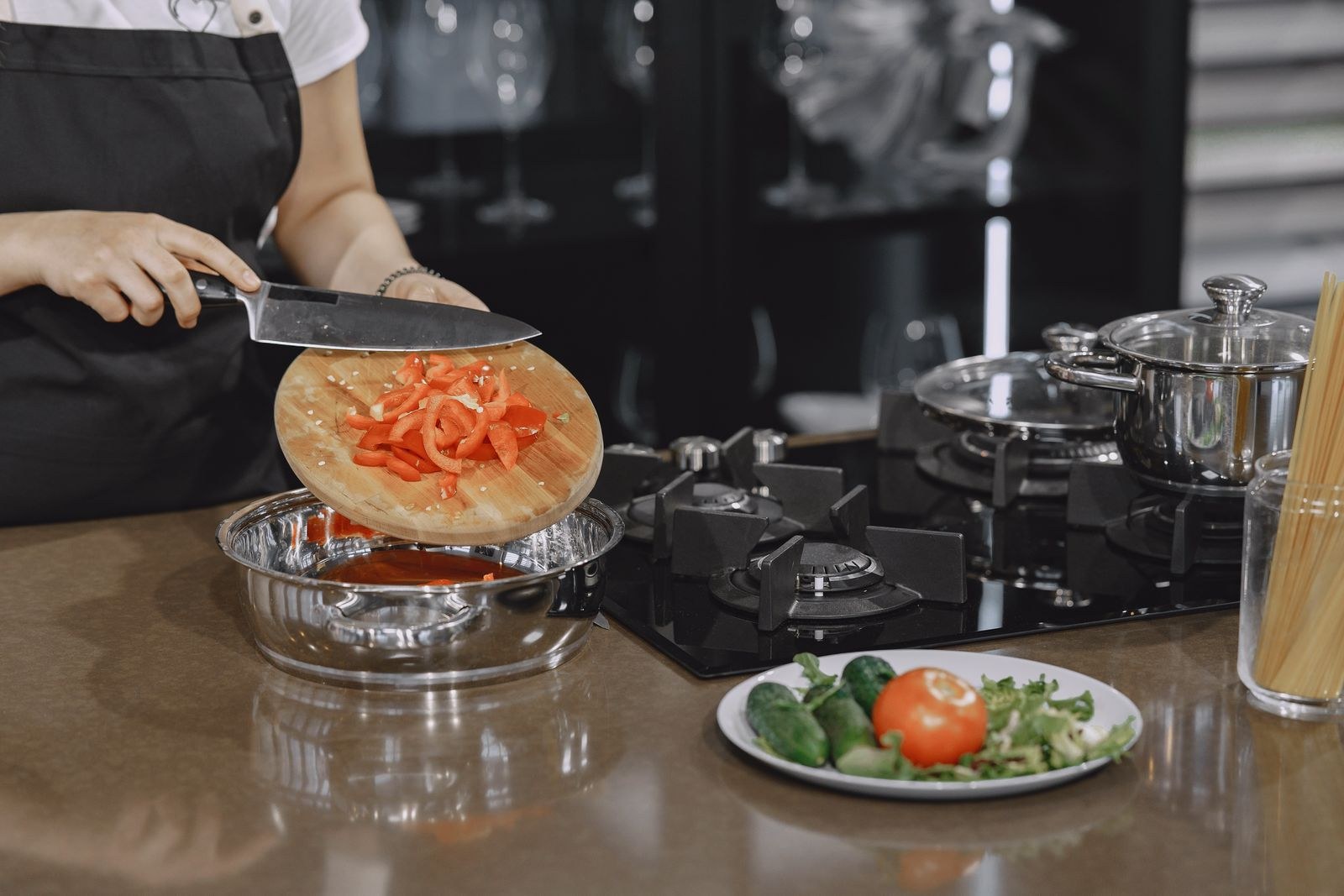
Cutting vegetables evenly is less about appearance than cooking control. A large chunk and a thin sliver of the same vegetable will not soften at the same rate. If they share a pan, one may be overdone before the other is ready.
Choose the cut for the meal. Small pieces suit a quick soup or sauté, while larger pieces may be appropriate for roasting. The recipe gives a starting point, but the actual pan, heat and quantity still affect the result.
Size is not the only variable
A carrot and a zucchini cut to similar dimensions do not necessarily cook together. Denser vegetables often need a head start, while softer ingredients can be added later. Keep prepared ingredients in separate groups when their timing differs.
Think about surface contact too. A flat cut side can brown against a pan or tray, while a round piece may make less contact. For roasting, arrange pieces in a way that supports the result you want rather than piling them deeply and expecting every side to color.
You do not need perfect cubes. Aim for a reasonably consistent thickness and remove unusually large or tiny pieces from the comparison. If a piece is awkward to cut safely, create a stable flat surface first using an appropriate technique and knife.
Keep the cutting board secure and your fingers clear of the blade. Slow, controlled preparation is more useful than imitating fast chopping. A suitable sharp knife used carefully can be easier to control than forcing a dull edge through a hard vegetable.
Check more than one piece
During cooking, test a few representative pieces, including one of the larger ones. Tenderness preferences vary by dish, so use the recipe's intended texture as a guide. A sauce or seasoning may hide uneven cooking visually without changing the actual bite.
If the pan contains vegetables that finish at different times, remove or add components as needed where the method allows. On the next attempt, adjust the cut or the order rather than simply increasing the total cooking time for everything.
This is a useful place to learn from one meal. Notice whether the carrots were too firm, the onions too dark or the zucchini too soft. Those observations tell you whether the next change should be size, sequence, heat or crowding, instead of treating every vegetable as interchangeable.