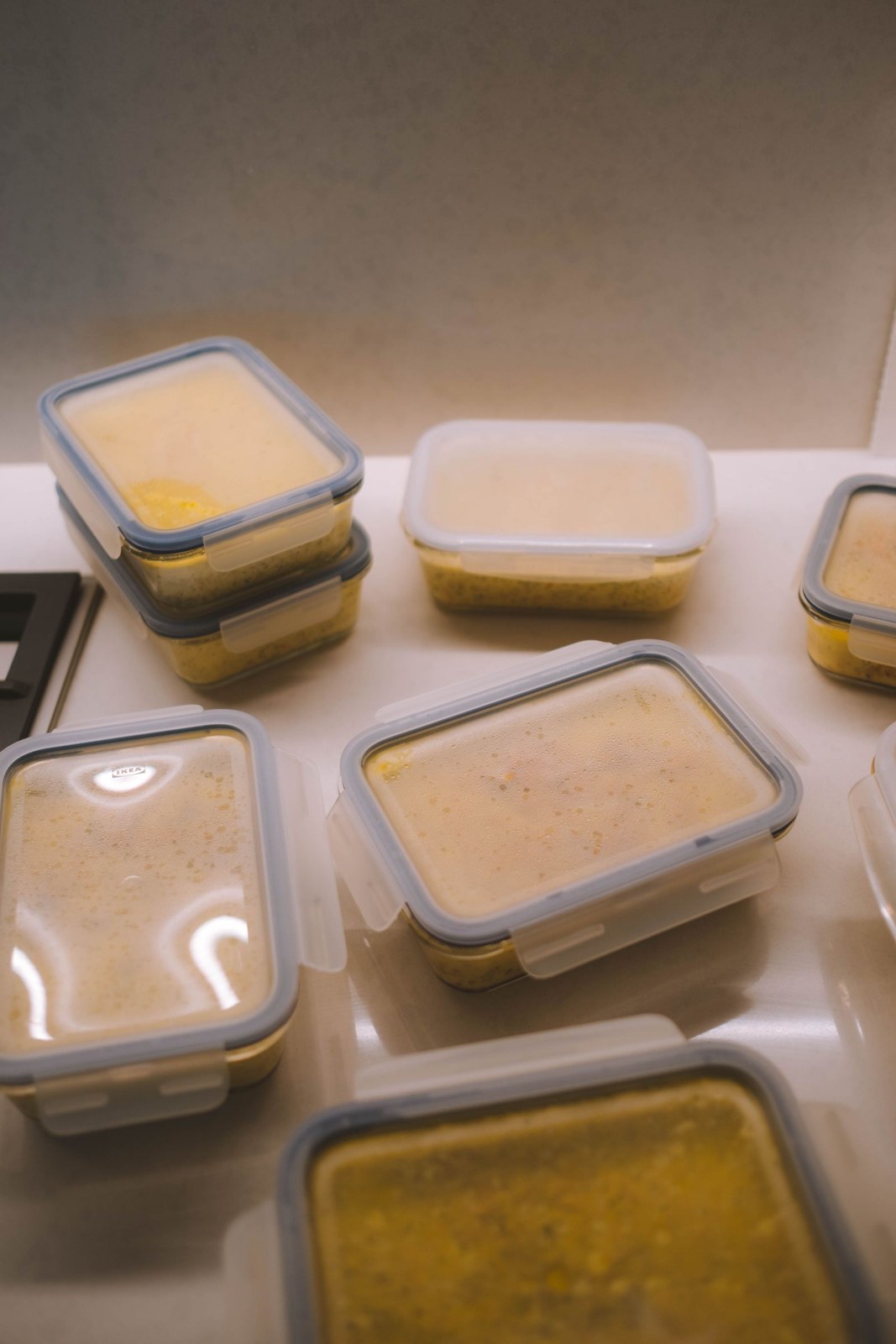
A common mistake with leftovers is leaving a full pot out until it feels completely cool. That can keep perishable food at unsuitable temperatures for too long. The safer plan begins before cooking: have shallow containers and refrigerator space ready for the amount you intend to save.
USDA guidance says perishable food should be refrigerated within two hours, or within one hour when the surrounding temperature is above 90°F. Small amounts of hot food can go directly into the refrigerator. Large quantities need to be divided so they can cool more effectively.
Reduce the depth
Transfer a large pot of soup, beans or another cooked dish into smaller shallow containers using clean equipment. A deep mass holds heat differently from several smaller portions. Follow reliable cooling guidance and the container's temperature limits, avoiding sudden temperature changes that could damage unsuitable glassware.
Do not overload the refrigerator with a large amount of hot food in a way that prevents it from maintaining safe temperatures. Check that the appliance is at 40°F or below and leave the ventilation and circulation arrangements required by its instructions.
Use an appropriate covering method during cooling and storage, following food-safety guidance. Protect food from contamination and avoid placing it where raw-food drips can reach it. A clean refrigerator shelf is part of the process.
Label the containers with contents and the cooking date. This is easiest while putting them away, not several days later when every box looks familiar. Refrigerated cooked leftovers generally should be used within three to four days when handled safely, or frozen sooner for later use.
Avoid the end-of-dinner bottleneck
If you often cook while tired, prepare the storage step before sitting down to eat. Put clean shallow containers on a clear surface, decide which portions are for tomorrow and identify a refrigerator shelf. Then putting food away is a short task rather than a search through mismatched lids after dinner.
For a shared meal, do not wait for every person to finish eating before storing the portion that is clearly intended as leftovers. Keep serving and storage utensils clean, and avoid repeatedly mixing food that has been handled at the table back into the saved batch.
A large batch that exceeds your cooling and refrigerator capacity is a reason to cook less next time. The theoretical convenience of many portions is lost if their temperature handling becomes uncertain.
Keep the next meal separate
When serving leftovers, remove the amount you need and return the rest to refrigeration promptly. Reheat the portion to 165°F throughout. Repeatedly warming and cooling the entire batch makes handling more complicated and can reduce quality.
If the food has already spent too long out, do not assume freezing or reheating will make it safe. Smell, taste and appearance cannot reliably identify every hazard.
Cooling is not an extra task reserved for large meal-prep sessions. Even an ordinary second portion benefits from a shallow container, prompt refrigeration and a clear date. Those habits make leftovers easier to use with confidence rather than leaving their history to memory.