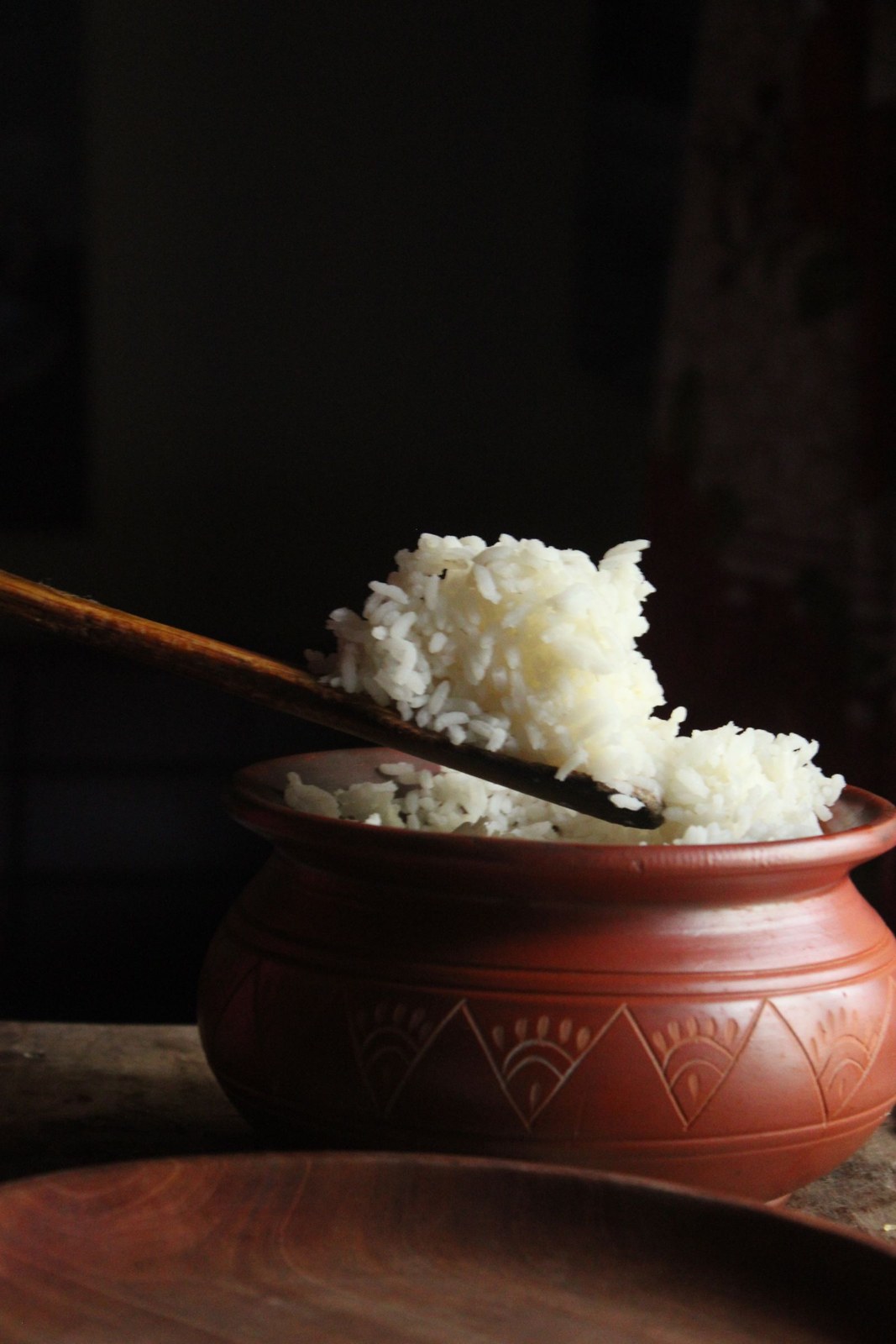
Rice instructions vary because rice varies. A ratio that works for one white rice in a covered saucepan may not suit brown rice, a different grain shape or a rice cooker. Start with the package and the appliance instructions instead of treating one remembered ratio as universal.
Check whether the instructions call for rinsing, soaking or a particular amount of water. Measure with a consistent cup or by weight as directed. If using a rice cooker, its supplied cup may be smaller than a standard US measuring cup, and its internal water lines may be tied to that cup and a specific cooking menu.
Set up before heating
Choose a pot with enough room and a suitable lid. Rice expands, and a very small pot can boil over. Follow the stated heat sequence, which may include bringing the water to a boil and then reducing to a gentle covered cook.
Repeatedly lifting the lid changes the cooking conditions. Check only as the method allows, and do not stir automatically if the recipe asks the rice to cook undisturbed. Some methods rely on a covered rest after heat is turned off; that time is part of the process rather than an optional delay.
If the rice is too firm or wet, diagnose the result before changing several things. Consider the measurement, lid fit, heat level and whether the prescribed rest occurred. Make one adjustment on the next attempt using reliable guidance for that rice.
What to check when the result is inconsistent
If rice sometimes works and sometimes does not, check whether you are changing the measuring cup or filling it differently. Also check the lid, the rice variety and whether the pot sits on the same burner. A loose lid or more vigorous simmer can change how much water escapes.
For a cooker, verify that the selected program matches the grain and that the bowl is correctly seated as the manual requires. Do not add water above a permitted fill line to compensate for an unexplained result. Clean and maintain the appliance according to its instructions, including any parts that affect venting.
If the package and appliance instructions appear to conflict, consult the manufacturer's guidance for that grain and model. A random ratio from a different rice cooker is not a reliable way to resolve the uncertainty.
Plan the leftovers early
Cooked rice needs careful storage like other perishable cooked foods. Divide leftovers into shallow containers and refrigerate promptly, generally within two hours or one hour above 90°F. Do not leave the pot on the stove until morning or wait for a large batch to cool completely on the counter.
Use safely refrigerated cooked leftovers within the usual three-to-four-day window, or freeze suitable portions sooner. Reheat to 165°F throughout and avoid repeatedly warming the entire batch when you need only one serving. Reheating cannot be relied on to correct earlier unsafe storage.
Write down the brand, amount and method when you find a result you like. That small note makes the next meal repeatable without claiming that the same instructions will work for every bag of rice you buy.