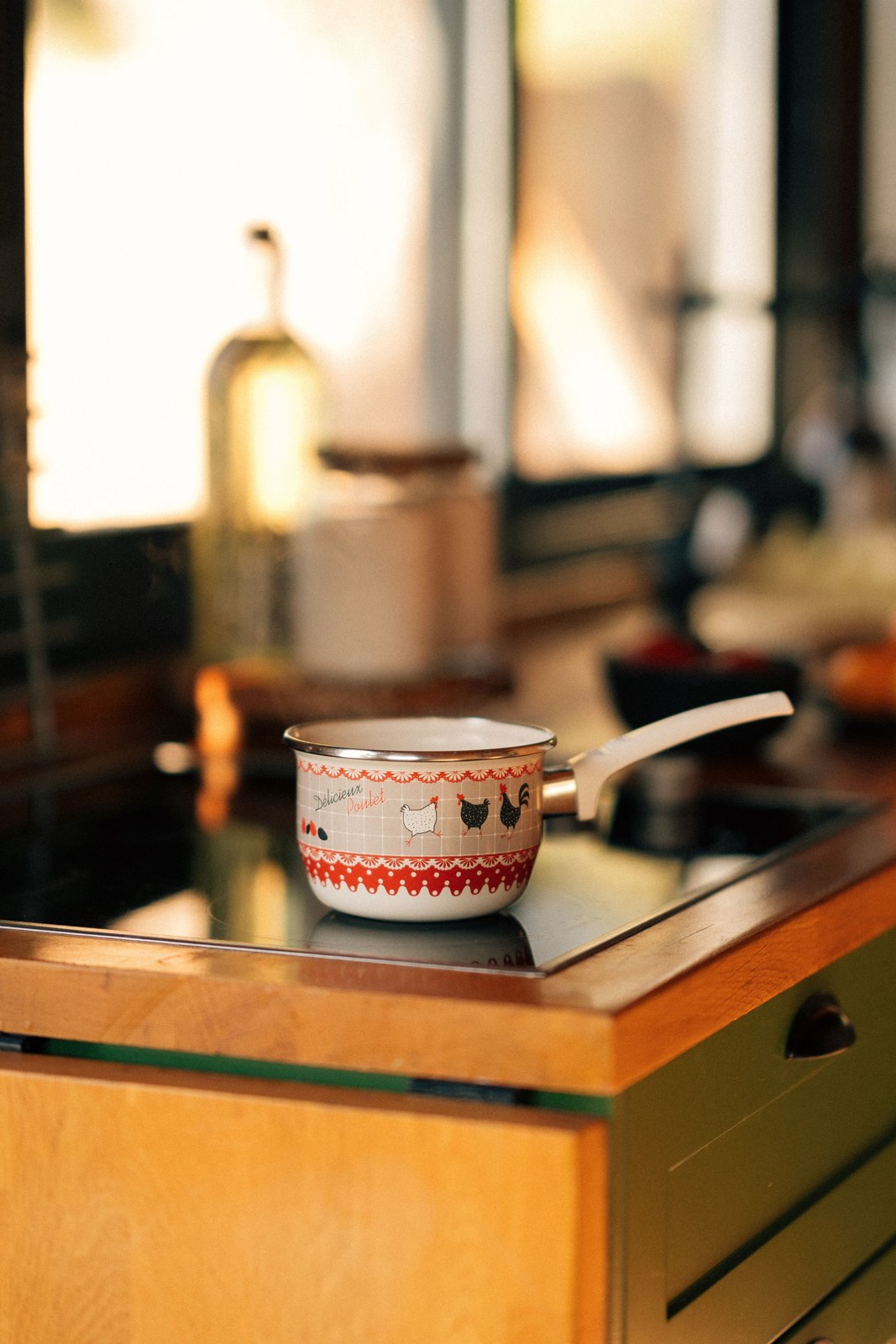
The saucepan that earns its place is usually the one you can use for several ordinary tasks: cooking grains, heating soup, making a sauce or boiling a small amount of pasta. Its advertised capacity helps, but you will not normally fill a pot to the brim while cooking. Leave room for movement, stirring and the behavior of the food.
Think about your usual quantity and your largest regular task. A small pot may be perfect for oatmeal yet awkward for stirring two portions of beans. A much larger one can be cumbersome for a little sauce. Choosing between those jobs is more useful than buying a complete sequence of sizes immediately.
Look at width and depth together
Two pots with similar capacity can feel very different. A narrower, deeper pot occupies less burner area but may be less convenient for stirring a thick mixture. A wider pot gives you more surface area, which changes how a liquid reduces. Neither shape is universally better.
Check the base against your stove's requirements, including induction compatibility if relevant. A flat-looking bottom and a shiny material name do not tell you everything about construction. Use the manufacturer's specifications for the exact model.
A lid should sit securely and be easy to lift with the protection its handle requires. Glass can let you observe the food, but condensation may limit the view. Check whether the lid and knob share the pot's oven and cleaning permissions; they may have different limits.
Imagine pouring and washing
A full saucepan can feel quite different from an empty display model. Consider the length and shape of its handle, whether it has a helper grip, and how you would drain or transfer food. A pouring lip is useful only if it works with the way you serve and the container you pour into.
Check the sink, drying rack and storage space before buying. Stacking cookware may save room, but protect surfaces as directed and avoid arrangements that leave heavy pots unstable. A handle sticking into the main walking route is not a small detail in a shared kitchen.
For a first purchase, prioritize a size and shape that serve most of your meals. You can manage an occasional smaller task in that pot more easily than you can make an undersized pot safely hold a much larger batch.