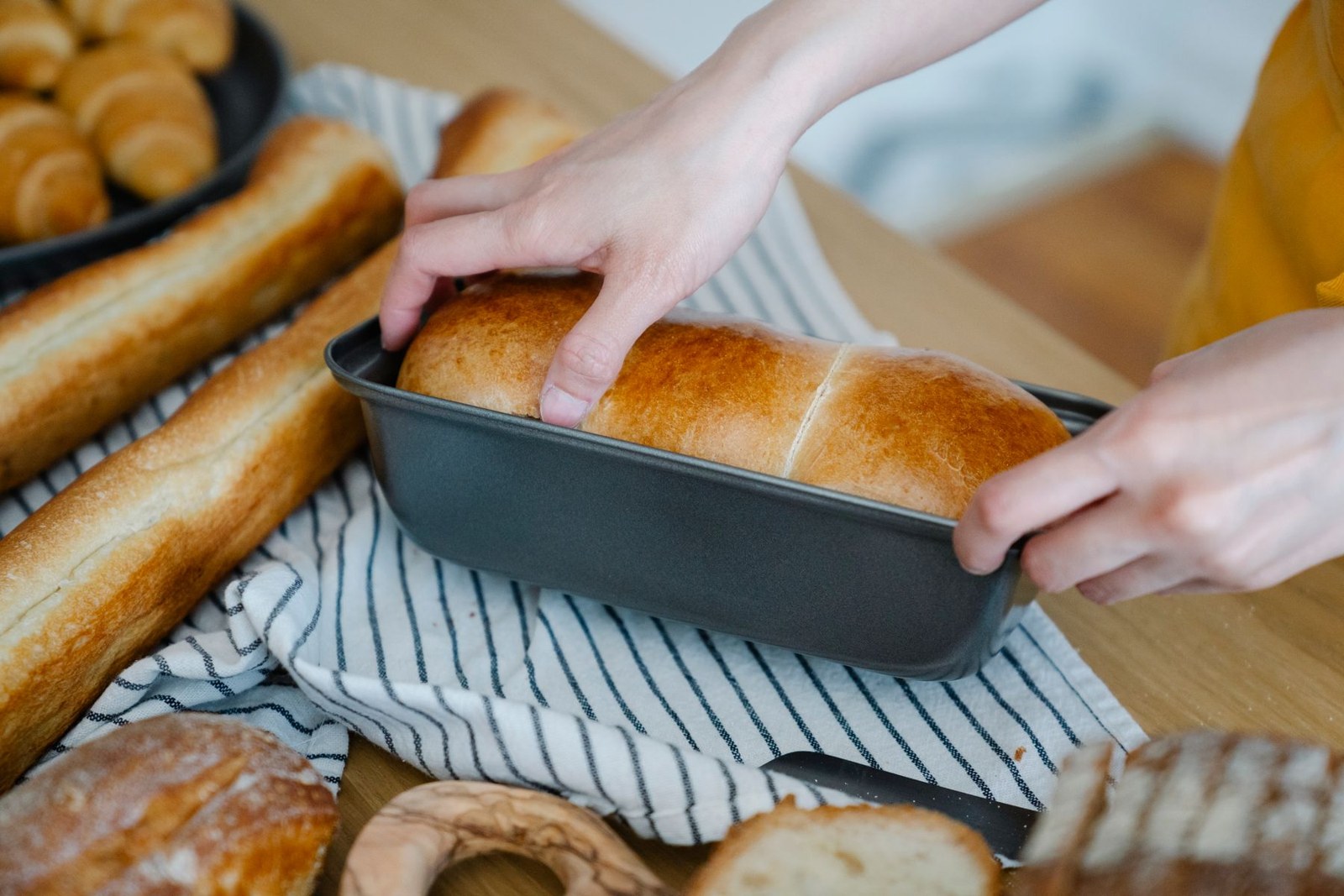
Loaf pans that look similar in a photograph can hold different amounts. A small difference in width or length can change how deeply a mixture sits, and therefore how it cooks. Start with the dimensions specified by the recipe rather than assuming all standard-looking loaf pans are interchangeable.
Check whether the listed measurements describe the inside or the outside. Rims and handles add size without adding useful volume. The pan also needs to fit the oven with the required clearance and leave room for a secure grip when it is hot.
Shape affects the result
Straight or sloping sides change how a loaf looks and how it releases. A deeper pan may hold a mixture in a thicker layer than a broader one. If you substitute a different size, do not rely blindly on the original baking time; follow a suitable recipe adjustment and check the result using appropriate doneness guidance.
Material and surface finish matter, too. Metal, glass and ceramic pans have different use and care instructions. A coated pan may require particular utensils and cleaning. A glass pan should not inherit the temperature-change permissions of a metal one.
Lining can help with removal when the recipe and pan instructions allow it. Check the liner's temperature and appliance restrictions, and avoid loose material near heating elements. A liner is not a reason to ignore the pan's own preparation directions.
Think about getting the loaf out
Allow the cooling or resting period the recipe calls for before trying to remove the food. Have a suitable rack or surface ready. Use tools compatible with the pan rather than scraping around a delicate coating with a sharp knife.
After washing, inspect seams, corners and the rim for trapped water or residue. Store the pan so its surface is protected from other cookware if required. A pan that nests tightly inside another may still need a protective layer or a different arrangement.
For a first purchase, choose the size used by several recipes you actually want to make. A specialty shape can wait. Consistent dimensions and a clear care routine will help more than buying a set of nearly identical pans before you know which one your recipes use.