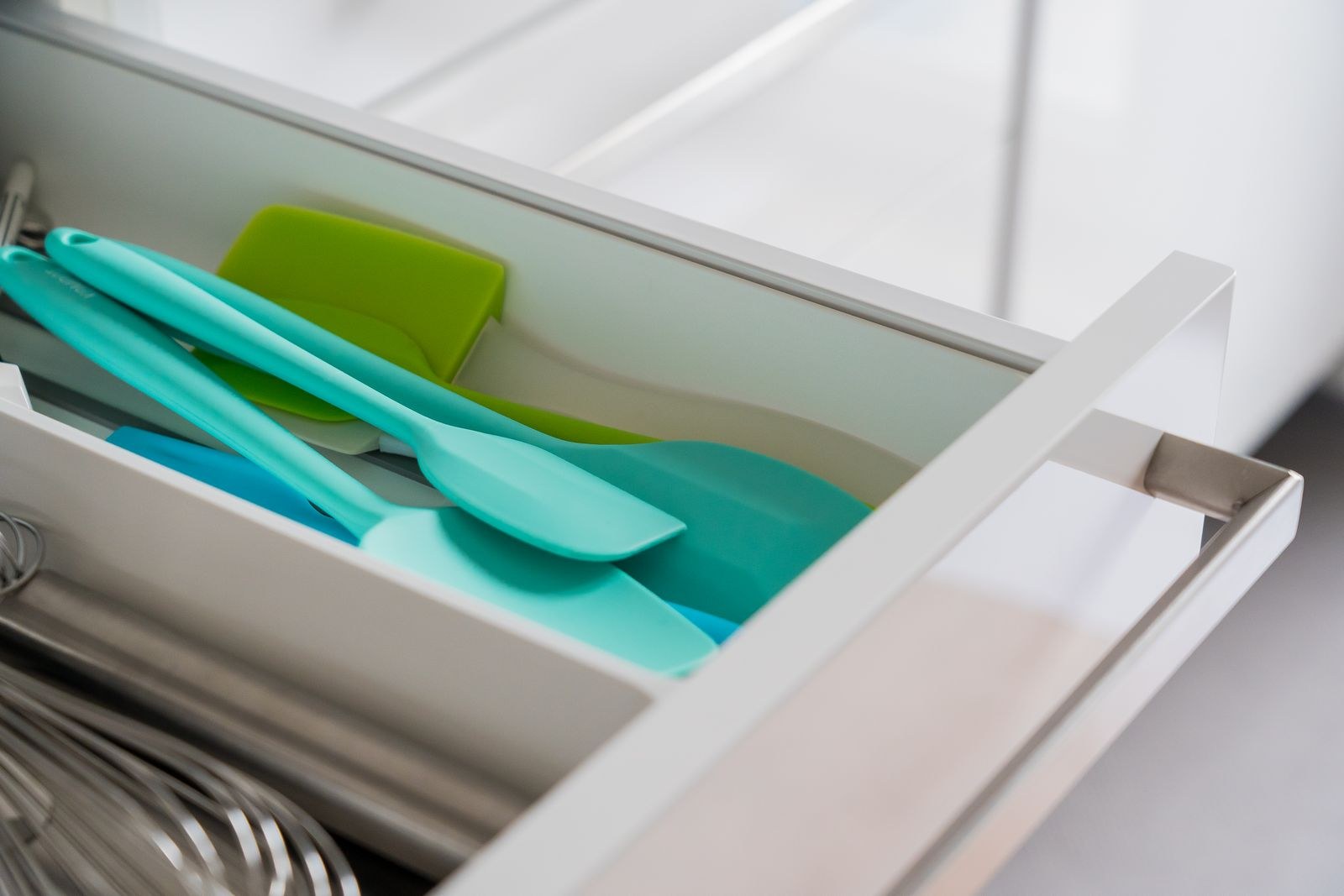
Shared kitchen drawers often contain three peelers and no reliable can opener. The problem is usually not a lack of shopping; it is that nobody knows what is already there or which items are usable. Empty one drawer before adding another tool.
Sort the contents by function and inspect their condition. Separate damaged items from working ones, and ask about ownership before discarding anything. A utensil that looks redundant may belong to someone who needs it for a particular task or dietary arrangement.
Put the most frequently used tools in the easiest position to reach. Group occasional items separately so they do not hide the everyday equipment. You may discover that two good spatulas are useful during shared cooking, while several nearly identical gadgets never leave the drawer.
Make a short list of communal items and genuine gaps. A photo of the organized drawer can be enough; the household does not need a complicated inventory system. Check that everyone understands which tools can be borrowed and how they should be cleaned after use.
Before buying a new item, ask whether the existing tool can perform the task safely. Do not force an inappropriate substitute, but avoid treating every recipe's named utensil as a separate purchase requirement. A spoon may already cover a job advertised for a specialist scoop.
Duplicates can be sensible when several people cook at once or when separation is needed. The aim is not to reduce every function to one object. It is to make the number of tools match the household's actual use.
If a tool repeatedly goes missing, give it a clear storage place rather than immediately buying another. A small divider or container can help, provided it does not make the drawer too crowded to close.
Review the arrangement after a few weeks. Keep useful duplicates accessible and move rarely used pieces where they can still be found. When someone moves out, update the shared list before the next grocery or household shopping trip. A few minutes of coordination can save both money and the frustration of opening a drawer that is full but unhelpful.