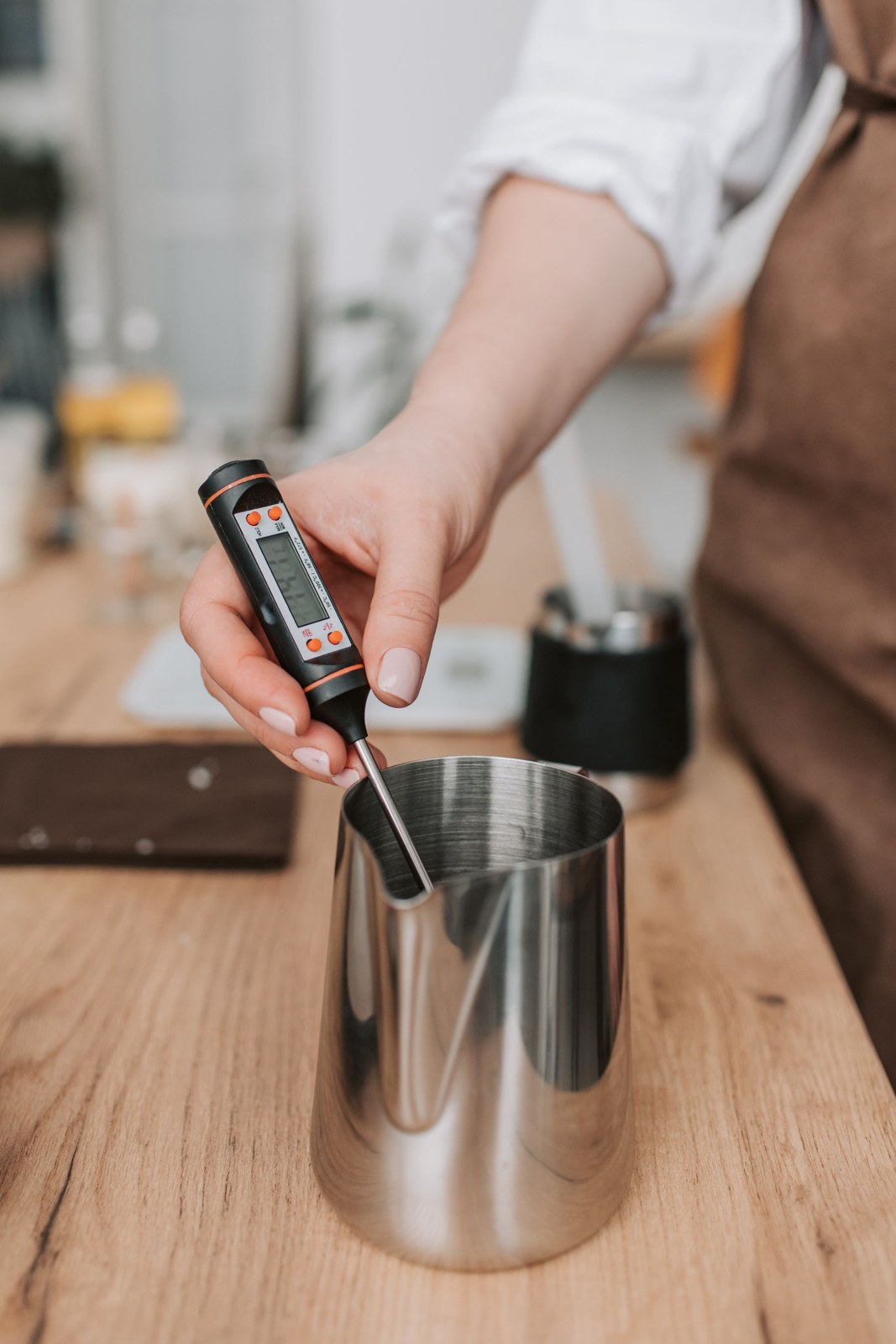
Color, browning and steam do not reliably tell you the internal temperature of food. A food thermometer gives you a measurement, but only when the probe is suitable for the task and placed correctly. Choosing one should begin with the food you expect to check.
For everyday cooking, a thermometer that can measure thin foods may be useful alongside thicker items. Different probe designs sense temperature over different areas. Read the instructions so you know how much of the probe must be inside the food and where the sensing portion is located.
Make the reading easy to take
A clear display matters when you are leaning near a hot pan or holding a plate steady. Check the unit setting, the location of the screen and whether the numbers remain visible at the angle you will use. A backlight can help in some kitchens, but it does not replace a readable layout.
Response time affects how long you need to keep the probe in place. Do not confuse an instant-read product name with a promise that the first number on the screen is final. Follow the model's instructions for waiting until the reading is ready.
Some probes can remain in food during cooking; others cannot. Confirm oven-use permissions, cable limits and the temperature range of every component. An electronic handheld thermometer should not be left in the oven unless its design specifically allows that use.
Pair the tool with the right guidance
Use current official safe-temperature guidance for the food being prepared. For reheated leftovers, USDA guidance calls for 165°F, or 74°C, throughout. Check more than one location when heating may be uneven, especially with microwave cooking. Avoid touching bone or the pan with the sensing area when measuring food.
Clean the probe before and after use according to its directions. Water resistance is not always the same as permission to immerse the display or put the device in a dishwasher. Keep raw-food residues from moving to food that is ready to eat.
Look for instructions on checking accuracy and any available calibration procedure. Some models allow adjustment; others require a different response if they read incorrectly. A foldaway probe or protective cover can make drawer storage easier, provided everything is clean and dry first.
Choose a model whose batteries, controls and instructions you can manage. A thermometer helps most when it is within reach and used correctly, not when a complicated one remains in its packaging.