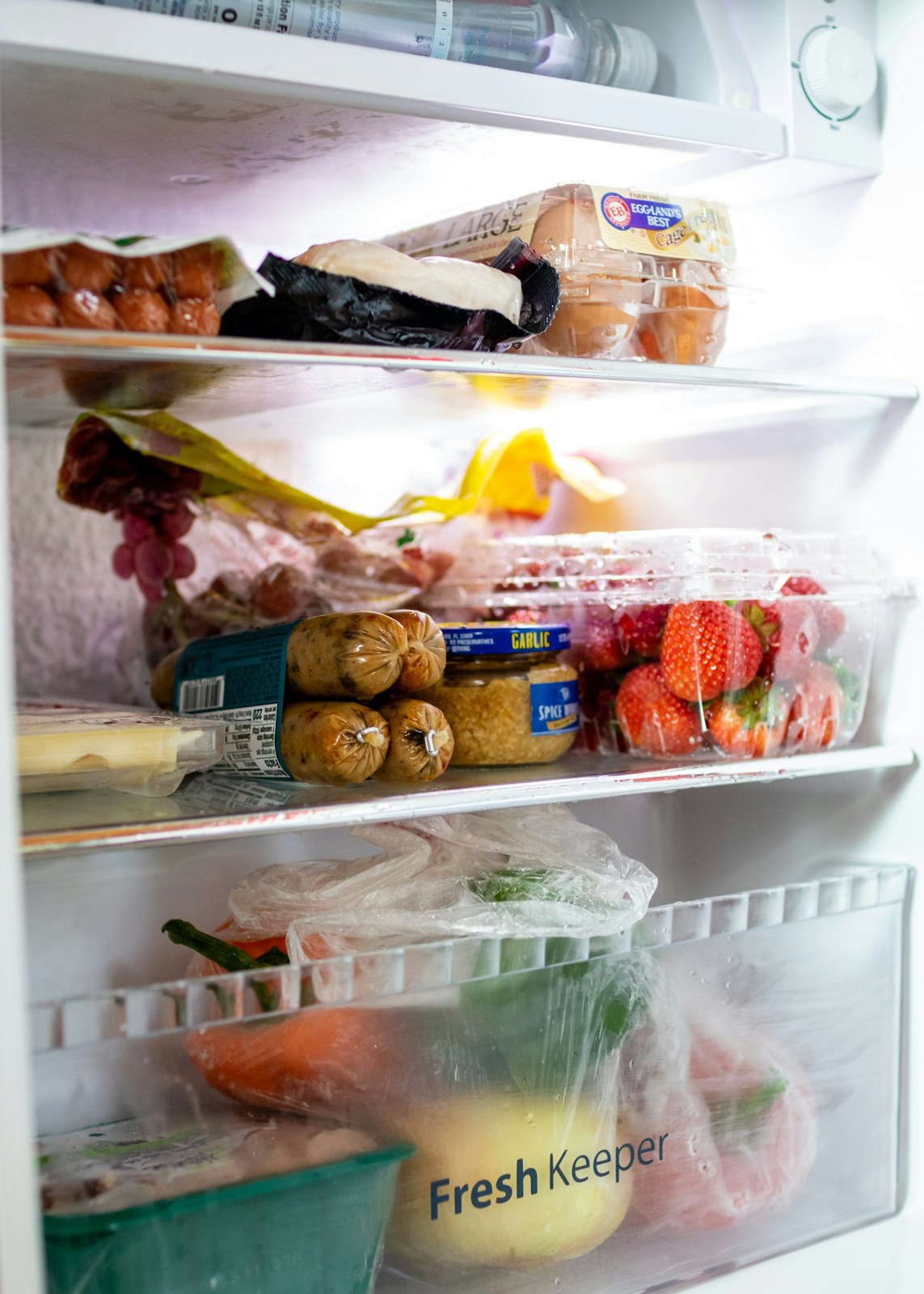
A mini fridge can solve a real storage problem, but first establish whether you are allowed to install one. A residence hall, lease or shared house may have appliance limits. Check the electrical rating, ventilation requirements and permitted location before comparing colors or door finishes.
Measure the intended space with the door open, not just the closed cabinet. A door that hits a desk can prevent a drawer from sliding out. The manufacturer's required clearances also count toward the footprint; pushing the appliance tightly into a cupboard is not a way to make an oversized model fit.
Think in groceries, not liters
Sketch the food you expect to store. A tall milk carton, a lunch container and several vegetables use space differently from drink cans. Adjustable shelves can be useful, but inspect their actual spacing and whether the door storage takes away depth from the main shelf.
A tiny internal ice compartment is not automatically equivalent to a separate freezer. Read the stated storage capabilities and temperature specifications. If frozen food matters to your routine, check that the compartment is designed to maintain freezer temperatures rather than assuming every icy-looking box can do the job.
Perishable food needs a refrigerator maintained at 40°F or below. A separate appliance thermometer helps you check conditions instead of relying on a numbered control dial. The freezer target is 0°F. Leave enough room for air circulation and avoid packing food against surfaces in ways the manual prohibits.
A delivery-day check
Before delivery, clear the route to the intended position and measure any narrow doorway. Decide where packaging will go while you inspect the appliance, and keep the seller's damage-reporting instructions accessible. Do not discard the box before checking the model and condition.
After positioning the fridge, follow the manufacturer's instructions about standing time after transport and initial cooling. Do not fill it immediately with perishable groceries merely because the light turns on. Check that it reaches the required temperature, using an appliance thermometer, before relying on it for those foods.
Observe the temperature during normal use as well. A dial setting that works with a lightly stocked fridge may need reassessment when the room is warmer or the door is opened frequently. Keep the ventilation spaces clear rather than gradually filling them with bags or books.
Living beside it
A fridge in a bedroom is different from one in a kitchen. Look for published noise information, then treat it as one factor rather than a promise of silence. Compressors cycle, and the floor and surrounding furniture can affect what you hear.
Find out how defrosting, cleaning and drainage work. Consider where food will go during maintenance and whether you can reach the interior without moving heavy furniture. Check delivery arrangements and the manufacturer's instructions for positioning and starting the appliance after transport.
Finally, compare energy information, warranty terms and the returns process alongside the purchase price. A compact fridge should earn its place through reliable storage that fits your actual groceries, not merely because it fits under a desk.