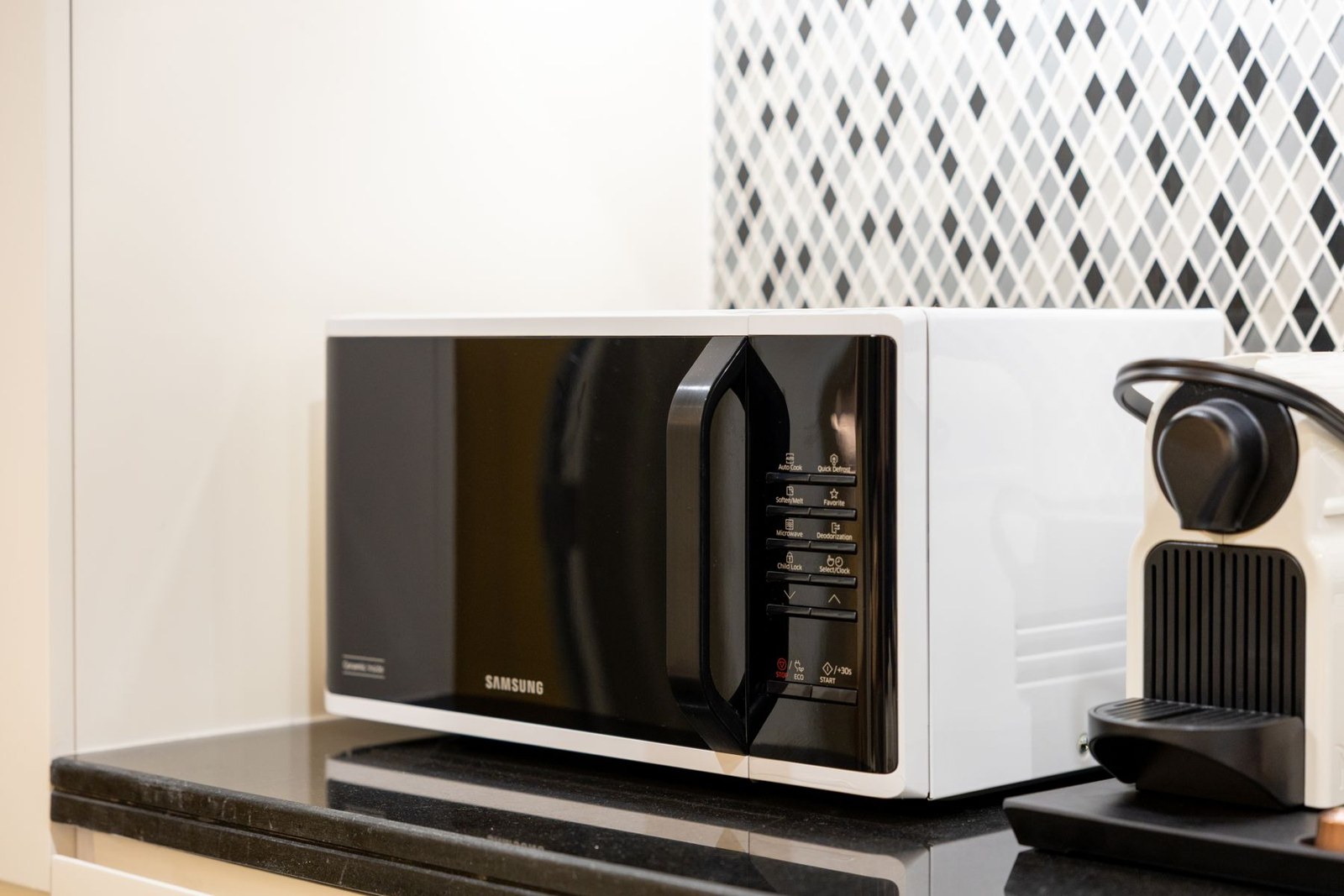
A microwave can fit on a shelf while failing to fit the dish you want to heat. Its exterior dimensions and advertised cavity volume tell only part of the story. Compare the interior shape, door opening and any turntable with the containers you use most often.
Start with a normal dinner plate and a lunch container. Include handles, lids and corners where relevant. A rectangular box may fit inside but catch as a turntable rotates. Do not assume the ability to place a dish in the cavity means the appliance can operate with it in that position.
Leave the space the manual requires
A countertop model needs the installation and ventilation conditions specified by its manufacturer. It should not be treated as a built-in appliance merely because it slides into a cupboard. Check required clearances and the permitted location of vents before choosing a shelf or recess.
Consider the door's full movement. You need enough room to open it and lift hot food out without twisting around another appliance. A handle, push button or control panel can change how comfortable that movement feels in a narrow kitchen.
Electrical requirements and housing rules also matter. Choose a model intended for the local supply and use the connection described in its instructions. Do not improvise adapters or extension arrangements to make an unsuitable location work.
Make controls part of the size decision
A small control panel should still be readable. Check how to set time, adjust power and stop the appliance. If you regularly reheat small portions, clear manual controls may matter more than a list of preset food names.
Inspect the removable parts and cleaning access. A turntable or support ring adds items to wash and replace if damaged. The door seals and interior need the cleaning routine in the manual; a compact cavity should not be so awkward that you avoid wiping spills.
Choose the smallest model that comfortably handles your ordinary dishes and required clearances. Going smaller than that can mean transferring every meal into a different container, which saves cabinet width while creating more work at lunchtime.